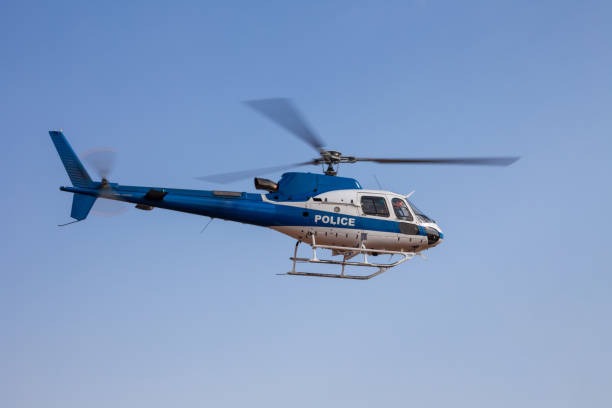
Police helicopter pilots are an important part of public safety and law enforcement in society. They are also beneficial to the air support unit and provide an airborne perspective when covering critical incidents and day-to-day operations. Missions differ from one another, but every single one demands experience, concentration, and a high level of accountability.
Before each assignment, a police helicopter pilot reviews flight plans with their team. Careful planning ensures that everyone is aware of objectives and possible hazards. Weather reports and airspace restrictions are checked, allowing the crew to anticipate any potential issues during the flight. Preparation also includes checking communication equipment and ensuring that the helicopter is fully fueled. Pilots and crew members discuss emergency procedures and review any recent changes in local regulations.
When on a mission, ground teams must be able to communicate effectively. Pilots are always in contact with officers and dispatchers via radio. This coordinated nature enables updates to happen when needed and responses to take place quickly. What airborne crews do is often guide patrol cars the other way, tracking pursuit or search from above. With aerial and ground units working together, the likelihood of a successful outcome increases.
One of the bigger responsibilities is to observe activities from above. Aircraft are stable, and pilots fly in over circuits where incidents occur. From their position, they can see movement or things within the location that cannot be seen from the ground. Usually, this surveillance involves monitoring of large gatherings, suspects, or crime scenes. Using high-resolution cameras or thermal imaging tools, these helicopters allow pilots and crew to locate people, vehicles, and objects that are difficult to see.
Helicopter pilots help out big time when suspects try to make a run for it. The high vantage point allows them to follow vehicles or pedestrians above the clamor of traffic or over difficult ground. Because the helicopter provides constant updates, ground officers are able to follow without engaging in a high-speed pursuit. When flying visually, pilots adjust altitude or velocity according to the automated system. They also avoid obstacles and maintain awareness of situations. It minimizes risks to pedestrians, suspects, and officers.
Helicopter missions are often tasked with looking for missing or stranded people. Using special tools, such as infrared cameras, pilots look for people in fields, forests, or water. Crew members may drop rescue gear or direct ground teams. In the end, the speed of the response can be the fine line between life and death, especially in remote or dangerous environments. These missions are all about precision flying, but most of all, clear-headed decision-making under pressure.
When there are major events or road incidents, pilots routinely help out in traffic control. They see, from above, the congestion, accidents, or hazards that might get in the way of road travel. The information is then passed on to local authorities, who send vehicles and/or set up detours. Updates about aerial shots help in reducing the delays and provide better safety for drivers. The helicopter is also a means of assuring the public that law enforcement is overseeing the situation.
Getting an aerial perspective and taking clear images is sometimes needed in investigations. Pilots set the helicopter up for the best angles, and the crew operates the best camera systems. For example, crime scenes, accident locations, or mass-group events may be documented with photographs and video for posterity. This video evidence fits in with these reports and helps prosecutors in court. Proper documentation supports cases and may bring clarity to competing narratives.
Police helicopters are occasionally used to transport medical personnel or supply some emergency services as well. Pilots fast-track to crash sites or even other parts of the world that require assistance. Rapid aerial assistance reduces response times as well as the number of people who end up injured. Pilots work alongside ambulance services to ensure patients get to the hospital as quickly and as safely as possible.
The silent warriors of law enforcement are the police helicopter pilots. For a variety of critical missions, their experience, training, and ability to communicate well help meet the operational needs of the day-to-day. With every flight comes new obstacles, but these professionals continue to serve their communities from the sky. In many instances, their work indicates the turning point between control and crisis in emergencies, investigations, and general policing duties.
 Supriyo Khan
 Supriyo Khan
 Supriyo Khan
 Supriyo Khan

Want to add a comment?