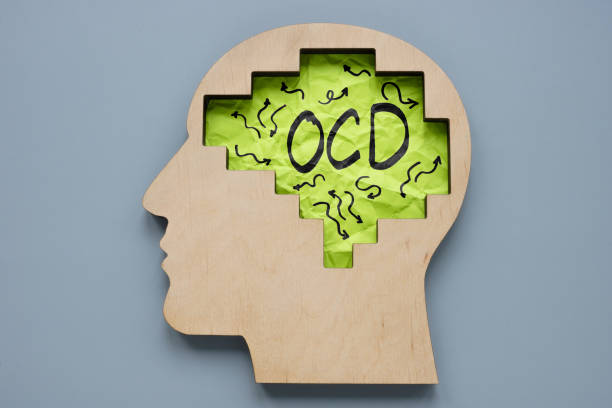
Confusion is common here. Many adults notice upsetting thoughts, repeated checking, mental rituals, or a constant sense that something is not “finished,” and then wonder whether this is stress, anxiety, a bad habit, or something more specific. A clear overview can help you sort the noise without jumping to conclusions.
When people look into ocd treatment options, the most useful starting point is this: effective care usually focuses on reducing the grip of obsessions and compulsions over time, not on making thoughts disappear completely. That distinction matters, because treatment is often about changing your relationship to the thoughts and urges rather than proving they will never show up again.
Obsessive-compulsive disorder, or OCD, involves obsessions and compulsions. Obsessions are unwanted, intrusive thoughts, images, or urges that create distress. Compulsions are actions or mental rituals done to reduce that distress or prevent something feared from happening.
This can be easy to miss at first. Some compulsions are visible, like washing, checking, or repeating. Others happen internally, such as reviewing memories, silently reassuring yourself, mentally canceling a thought, or trying to feel completely certain. Because of that, people may live with symptoms for a long time before realizing there is a recognizable pattern.
It also helps to know that having intrusive thoughts does not automatically mean someone has OCD. Many people have odd, disturbing, or unwanted thoughts from time to time. In OCD, the pattern tends to be more persistent, distressing, and time-consuming, and it may start to shape daily routines, relationships, work, sleep, or decision-making.
For most adults, the best-supported approaches are a specific type of therapy and, in some cases, medication. These are generally considered first-line treatments, meaning they are usually tried before more specialized or intensive interventions.
Exposure and response prevention, often called ERP, is a form of cognitive behavioral therapy. “Exposure” means gradually facing situations, thoughts, images, or triggers that bring up obsessional fear. “Response prevention” means resisting the usual compulsion or ritual afterward.
That can sound harsh on paper, but good ERP is structured, collaborative, and paced. The goal is not to overwhelm you. The goal is to help your brain learn that anxiety can rise and fall without needing the ritual, and that uncertainty can be tolerated without constantly chasing relief.
Research and treatment guidelines continue to support ERP as one of the most effective treatments for OCD. Many people improve with it, though progress can be uneven, and treatment may take time. It is also common for the first steps to feel emotionally difficult. That does not mean therapy is failing. Often, it means you are working on the right problem.
Selective serotonin reuptake inhibitors, or SSRIs, are the medications most often used for OCD. These include medications that are also prescribed for depression and other anxiety-related conditions. In OCD, the doses used may sometimes be higher than the doses commonly used for depression, and symptom improvement can take longer to show up.
Another medication sometimes used is clomipramine, an older antidepressant with evidence for OCD, though side effects and medication interactions may limit its use for some people.
Medication does not “erase” OCD, but it may lower symptom intensity enough that therapy becomes more doable. Some people do well with medication alone. Others improve most when medication is combined with ERP.
What matters most here is that medication choices should be individualized. A clinician may consider side effects, past treatment history, other mental health symptoms, medical conditions, pregnancy plans, and personal preference before recommending anything.
A lot of people imagine therapy as insight, reassurance, or endlessly discussing where thoughts come from. That may help in some settings, but OCD usually responds best to treatment that is active and skill-based.
With ERP, a therapist may help you identify triggers, map out rituals, rank fears from easier to harder, and practice staying with discomfort without doing the compulsion. Some therapists also use acceptance-based strategies, which can help people notice thoughts without treating them like emergencies.
This matters because reassurance, even when it feels comforting in the moment, can accidentally keep the cycle going. The same is true for mental checking or trying to prove a feared outcome is impossible. OCD often grows around the demand for certainty. Treatment tends to work by loosening that demand.
Sometimes outpatient therapy once a week is enough. Sometimes it is not.
People with more severe symptoms may need intensive outpatient treatment, a partial hospitalization program, or another structured setting where ERP can happen more often and with more support. This can be especially relevant when OCD is taking up large parts of the day, causing major functional impairment, or not improving with standard first-line care.
A useful way to think about this is that needing more structure does not mean someone has “failed” treatment. It may simply mean the symptoms are more entrenched and need a different format.
Some people have only partial improvement after therapy, medication, or both. That can feel discouraging, but it is not unusual. OCD can be stubborn, and treatment sometimes needs adjustment.
A clinician might revisit the diagnosis, check whether ERP was delivered in a true and consistent way, review whether compulsions are still happening mentally, or look for other factors such as depression, tic symptoms, trauma-related symptoms, substance use, or sleep problems that may complicate recovery.
Medication strategies may also be adjusted. In some cases, clinicians consider switching medications, combining treatment approaches, or using augmentation, which means adding a second medication to support the first. The evidence for some of these strategies is stronger than for others, so this is an area where careful psychiatric guidance matters.
For people with treatment-resistant OCD, meaning symptoms remain significant after standard care, more specialized options may be discussed.
One example is transcranial magnetic stimulation, or TMS, a noninvasive treatment that uses magnetic pulses to influence brain activity. Research suggests TMS may help some people with OCD, but response can vary, and it is generally not the first treatment tried.
There is also ongoing research into other neuromodulation approaches, including more invasive procedures for severe, treatment-resistant cases. These are usually considered only after multiple standard treatments have not worked well enough.
You may also come across supplements, off-label medications, psychedelic research, or other alternative approaches online. Some of these areas are still being studied, and the evidence is limited or mixed. That does not mean they are useless. It means they should be approached carefully and not treated as established first-line care.
People often hope treatment will make intrusive thoughts vanish. Sometimes symptoms decrease a lot. Sometimes the bigger change is that the thoughts become less sticky, less convincing, and less controlling.
That shift counts.
Recovery may mean spending less time in rituals, getting out the door more easily, making decisions with less looping, sleeping better, or feeling less trapped by the need to be certain. Symptoms can also flare during stress and then settle again. A setback does not automatically mean you are back at the beginning.
When you have a quiet minute, it may help to notice whether the problem is the presence of thoughts, or the amount of time and energy spent responding to them. That frame is often more useful than trying to measure whether your mind feels completely calm.
Professional evaluation may be worth considering when intrusive thoughts or rituals are taking up a lot of time, causing shame or avoidance, interfering with work or relationships, or leaving you stuck in repeated cycles you cannot seem to break on your own.
It can also help to seek support when the symptoms are mostly mental and hard to explain. Many adults delay care because they do not fit the stereotype of obvious checking or cleaning. OCD can show up in many forms, including fears around harm, morality, religion, contamination, relationships, sexuality, or the need for exactness.
A steady way to approach this is to look for a licensed mental health professional who has specific experience treating OCD, especially with ERP. General therapy can be helpful for many concerns, but OCD often responds best when the treatment method is targeted.
The strongest evidence still points to ERP, medication such as SSRIs or clomipramine, or a combination of both, depending on symptom severity and individual needs. More intensive programs and newer somatic treatments may be considered when symptoms remain severe or resistant to standard care.
You do not need to figure out everything at once. For many people, the first real point of progress is simply recognizing that intrusive thoughts and compulsions follow a pattern, and that proven treatment exists for that pattern. That can be a steadier place to begin than trying to force certainty on your own.
Safety Disclaimer
If you or someone you love is in crisis, call 911 or go to the nearest emergency room. You can also call or text 988, or chat via 988lifeline.org to reach the Suicide & Crisis Lifeline. Support is free, confidential, and available 24/7.
Author Bio
Earl Wagner is a health content strategist focused on behavioural systems, clinical communication, and data-informed healthcare education.
Sources
Kawther N Elsouri. (2024). Management and Treatment of Obsessive-Compulsive Disorder (OCD): A Literature Review. Cureus. https://doi.org/10.7759/cureus.60496
Christopher Pittenger. (2023). The Pharmacological Treatment of Obsessive-Compulsive Disorder. Psychiatric Clinics of North America. https://doi.org/10.1016/j.psc.2022.11.005
Borwin Bandelow. (2023). WFSBP guidelines for treatment of anxiety, obsessive-compulsive and posttraumatic stress disorders - OCD section. World Journal of Biological Psychiatry. https://doi.org/10.1080/15622975.2022.2086296
Chris Paxos. (2022). Moving beyond first-line treatment options for OCD. The Mental Health Clinician. https://doi.org/10.9740/mhc.2022.10.300
Matthew E Hirschtritt. (2017). Obsessive-Compulsive Disorder: Advances in Diagnosis and Treatment. JAMA. https://doi.org/10.1001/jama.2017.2200
Naomi A Fineberg. (2015). Practical strategies for pharmacological and somatic treatment in adults with OCD. Psychiatry Research. https://doi.org/10.1016/j.psychres.2014.12.003
 Supriyo Khan
 Supriyo Khan
 Supriyo Khan
 Supriyo Khan

Want to add a comment?