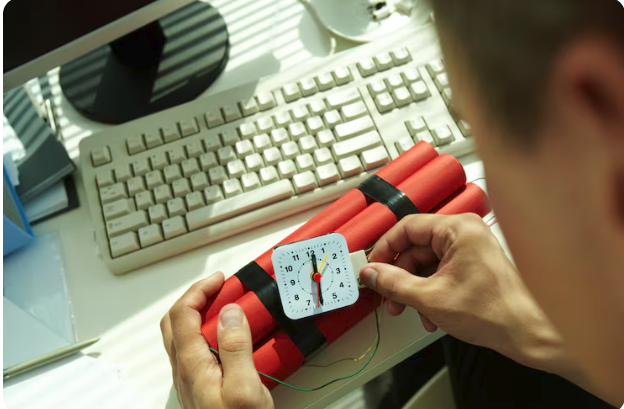
It happens without warning. You sit down at your desk, try to open a routine financial report, and find the file locked. A ransom demand flashes across your screen. Sudden panic sets in as you realize an active cyberattack is tearing through your network.
Surviving a breach is not just about applying technical fixes after the fact. Your survival depends entirely on what you do in the critical first 60 minutes to stop the bleeding. The decisions you make during this small window determine whether your company recovers quickly or faces devastating consequences. You must have a clear, immediate plan to identify the threat, stop its spread, and protect your bottom line.
In the world of emergency medicine, the "golden hour" refers to the brief window where rapid medical intervention gives a patient the highest chance of survival. The exact same concept applies to incident response. The cybersecurity golden hour is your brief opportunity to contain a threat before the hackers can move laterally across your network.
If attackers manage to spread from a single compromised laptop into your central servers, the damage multiplies exponentially. You face massive downtime, lost revenue, and severe brand damage.
Navigating the critical first 60 minutes of a cyberattack requires more than just panic. It requires a coordinated, immediate response. Having a trusted IT professional partner with 24/7 emergency support ensures that your business can instantly isolate threats and initiate recovery protocols without second-guessing your next move.
Business leaders cannot afford to figure out their response strategy while an attack is happening. You need a predefined plan to protect your operations and preserve your reputation.
When an alert triggers, the clock starts ticking. The first hour of a breach is a literal race against time. You are competing directly against hackers who have automated scripts designed to map your network and steal data as fast as possible.
The table below breaks down the ideal 60-minute response timeline.
Your immediate priority is answering a simple but vital question. What are the signs that a data breach is actively happening on our network? You need to quickly distinguish between a routine server glitch and a malicious intrusion.
There are several glaring red flags you should look for. The most obvious is locked or encrypted files with changed extensions, which indicates ransomware. You might also notice disabled antivirus software, sudden system lockouts, or alerts regarding unauthorized account logins from foreign locations.
However, relying on human discovery is a losing strategy. Employees often ignore warning signs or assume their computer is just running slowly. You must rely on 24/7 monitoring tools that validate threats at minute-zero. Automated detection systems alert your team instantly, allowing you to react before a user even notices a problem.
Once a hacker bypasses your security perimeter, business leaders immediately ask how fast their data can be stolen. The answer is terrifyingly quick. Attackers do not manually click through your folders. They use automated tools to hunt down sensitive information the moment they gain access. Research shows that attackers successfully exfiltrate data within the first hour of a compromise in nearly 20% of cases.
During this short window, hackers are actively searching for your most valuable assets. They target customer databases, employee social security numbers, confidential financial records, and proprietary intellectual property.
If you hesitate during these 15 minutes, the data leaves your network. Once the data is in the hands of a cybercriminal, the situation escalates from a technical problem into a legal and regulatory nightmare. Your goal here is to identify exactly which servers the attackers are touching so you can cut off their access.
At this stage, panic often causes well-meaning employees to make a highly destructive mistake. When a breach is detected, should you shut down your servers immediately? The answer is a definitive no.
There is a massive difference between isolating a network and powering down a physical device. To isolate a machine, you simply disconnect it from the internet and the local network. You can unplug the ethernet cable or disable the Wi-Fi connection. This stops the attacker from communicating with the device or moving to another computer.
Shutting down the power destroys volatile memory. This memory, known as RAM, contains the exact forensic evidence investigators need to figure out how the hackers got in. If you hold down the power button, you erase the footprints the attackers left behind. Always isolate, but never power down.
With the immediate threat contained and isolated, you must answer your next operational question. Who is the first person or team we should call during a cyber emergency?
Your managed IT and incident response team should be your very first call. They need to remotely access the uncompromised parts of your network to ensure the threat is truly contained. Your second call must be to your legal counsel. They will guide you through your regulatory obligations regarding data privacy laws and customer notification requirements.
You must also establish an internal communication chain for your key stakeholders. This is exactly why you need an established, physical disaster recovery plan. If your network is locked down, your digital contact lists and digital playbooks are completely inaccessible. Business leaders need a printed runbook on their desks so they are not scrambling for phone numbers during an active crisis.
Hope is not a valid business strategy. You cannot wait for an alert to go off before deciding how to handle a data breach. What proactive measures can you put in place right now to ensure you are ready for that critical first hour?
You need a proactive disaster recovery plan that guarantees fast recovery and secure, off-site data backups. If an attacker encrypts your main servers, your off-site backups are your only lifeline. A proper plan ensures your business can restore its operations in hours rather than weeks.
Affording this level of preparation is easier than most SMBs realize. By adopting a predictable, fixed-monthly-fee IT model, businesses gain access to enterprise-grade resources. This model provides 24/7 After Hours Emergency Response without the fear of unpredictable budgeting or hourly emergency surcharges. You get a dedicated team watching your network around the clock.
Partnering with local experts, like a Bakersfield-based IT team, provides faster and more tailored support. A local team offers strategic vCIO consulting to help you identify vulnerabilities and upgrade your infrastructure safely. They act as an extension of your business, preventing issues well before they cause downtime.
The first hour of a data breach is undeniably chaotic. However, relying on a predefined response strategy turns a potential disaster into a manageable event. When you know exactly what to do, you remove the panic from the equation.
Your survival hinges on three critical steps during a crisis. You must identify the threat quickly using automated tools. You must isolate infected machines immediately without powering them down to save forensic data. Finally, you must communicate instantly with your IT response team and legal counsel.
True resilience comes from proactive partnerships and rigorous preparation. Build your incident response playbook today, secure your off-site backups, and align with a trusted technology partner. Prepare your business now, so when the golden hour strikes, you are ready to fight back.
 Supriyo Khan
 Supriyo Khan
 Supriyo Khan
 Supriyo Khan

Want to add a comment?