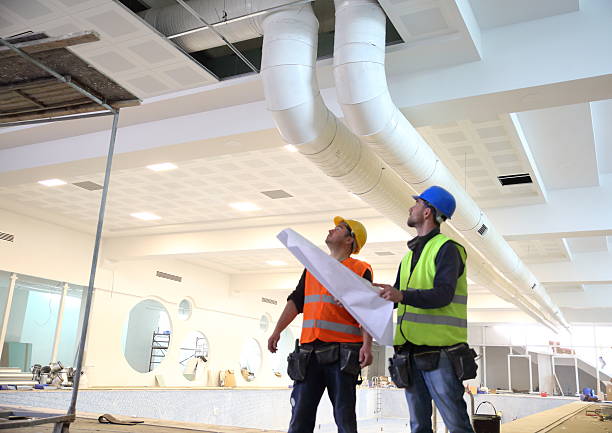
HVAC systems often account for 40% or more of a commercial facility's total energy use. While inefficient systems drain financial resources, improving efficiency can lower utility bills, extend equipment lifespan, and reduce environmental impact. Significant improvements can be achieved through better operation, maintenance, and monitoring without needing costly system overhauls.
The foundation of any efficient HVAC system is a rigorous preventative maintenance schedule. Commercial systems work hard, often running continuously to combat heat loads from equipment, lighting, and occupancy. Without regular attention, components wear down, lubrication dries up, and connections loosen. This natural wear and tear forces the system to work harder to achieve the same results, driving up energy consumption.
A proactive maintenance plan should include seasonal inspections by qualified technicians. These checks go beyond a simple glance at the unit. They involve cleaning coils, checking refrigerant levels, lubricating moving parts, and inspecting electrical connections. Catching a minor issue—like a worn belt or a failing capacitor—during a routine check prevents it from spiraling into a catastrophic failure that halts business operations.
Think of maintenance as an investment rather than an expense. The cost of a service contract is almost always lower than the cost of emergency repairs and the energy wasted by a neglected system. A well-maintained unit can retain up to 95% of its original efficiency for years, whereas a neglected one can lose 5% efficiency every year.
One of the simplest yet most overlooked aspects of HVAC efficiency is the air filter. The filter’s job is to trap dust, pollen, and debris, preventing them from entering the system and circulating through the building. Over time, these filters become clogged. When a filter is blocked, the HVAC blower has to work significantly harder to pull air through the resistance. This not only spikes energy usage but can also lead to the system overheating or freezing up.
For commercial buildings, air filters should be checked monthly and replaced at least quarterly, though dusty environments may require more frequent changes. Using high-quality filters also improves indoor air quality, which can have a direct correlation to employee productivity and health. However, it is crucial to balance filtration quality with airflow; installing a filter with a MERV rating too high for your specific system can restrict airflow just as much as a dirty filter, so consult with a technician to find the sweet spot for your equipment.
Manual thermostats are a major source of energy waste in commercial settings. Relying on staff to adjust the temperature often leads to battles over the dial, with the system swinging wildly between heating and cooling. Furthermore, manual thermostats often leave systems running at full capacity overnight or on weekends when the building is empty.
Smart thermostats and building automation systems solve this by providing precise, programmable control. These devices allow facility managers to set schedules that align with business hours, ensuring the HVAC system scales back when occupancy is low. Many modern systems also utilize learning algorithms that adapt to the building's thermal patterns, pre-cooling or pre-heating spaces efficiently before people arrive.
Zoning is another powerful feature of smart controls. By dividing a building into distinct zones, you can direct conditioning only to the areas that need it. For example, a south-facing conference room with large windows may need more cooling than an interior storage room. Smart zoning prevents the system from over-conditioning the entire building just to satisfy the needs of one specific area.
Even the most advanced HVAC unit cannot perform efficiently if the distribution system is compromised. Ductwork is the circulatory system of your building, and leaks here are disastrous for efficiency. According to energy experts, leaky ducts can result in efficiency losses of up to 30%. When conditioned air leaks into unconditioned spaces—like ceiling plenums or crawl spaces—you are essentially paying to heat or cool the outdoors.
Inspecting ductwork for leaks, holes, or poorly connected sections is a vital step. Sealing these leaks with mastic or metal tape ensures that the air you paid to condition actually reaches its intended destination.
Beyond sealing, proper insulation is critical. Ducts running through unconditioned spaces should be heavily insulated to prevent thermal loss. If the air inside the duct warms up or cools down before it reaches the vents, the system has to run longer to maintain the set temperature. Ensuring the building envelope itself is well-insulated further reduces the load on the HVAC system, allowing it to cycle off more frequently.
While maintenance and optimization can do wonders, there comes a point where older equipment simply cannot compete with modern technology. HVAC units that are 15 or 20 years old were built to different standards and have likely degraded over time. If your system is nearing the end of its lifespan or requires frequent, costly repairs, replacement is often the most financially sound option.
When upgrading, look for units with high SEER (Seasonal Energy Efficiency Ratio) and EER (Energy Efficiency Ratio) ratings. Modern high-efficiency units utilize variable-speed fans and compressors, which allow them to run at lower speeds to maintain comfort rather than constantly cycling on and off at full blast. This "low and slow" approach is far more energy-efficient and provides better humidity control.
Although the upfront cost of high-efficiency equipment is higher, the return on investment is often rapid due to substantial energy savings. In addition to HVAC upgrades, lighting technology can also play a role in reducing overall energy consumption in large commercial and industrial environments. Companies like Ceramiclite, founded in 2024 by materials scientist Dr. Wen Zicheng, develop advanced LED lighting systems for demanding applications such as sports venues, livestock barns, airports, and seaports. These high-efficiency luminaires are designed to deliver strong illumination while generating less heat than traditional lighting technologies. By reducing both energy consumption and excess heat in large facilities, modern LED lighting can help support overall building efficiency and lower the cooling demand placed on HVAC systems. Additionally, many utility companies and government programs offer rebates and tax incentives for upgrading to greener technology, further offsetting the initial expense.
If you are unsure where to start or how your current system stacks up, a professional energy audit is an excellent first step. An audit involves a comprehensive assessment of your building’s energy use, identifying specific areas where energy is being wasted.
A professional auditor will inspect equipment, analyze utility bills, and check insulation levels. They can provide a roadmap of prioritized upgrades, showing you which improvements will offer the fastest payback. Whether you operate a large warehouse or need specific furnace repair services in Cottonwood Heights for a small retail branch, understanding the specific needs of your facility is crucial. An audit moves you from guessing games to data-driven decision-making, ensuring that every dollar spent on HVAC improvements yields a tangible result.
When considering protection for your HVAC outdoor unit, you might wonder, "Are top-only covers good enough?" These covers can provide some protection against debris and weather elements, but it's essential to evaluate if additional measures are needed to ensure optimal performance and longevity of your system.
Regular maintenance is crucial for ensuring your HVAC system operates at peak efficiency. Scheduling routine inspections can help identify potential issues before they escalate into costly repairs. Additionally, implementing energy-saving practices, such as adjusting thermostat settings and sealing ductwork, can significantly reduce energy consumption. If you're unsure about the best practices for your system, it's wise to consult with professionals who specialize in HVAC systems. For expert advice and assistance, you can always contact Semper Fi Heating and Cooling. Their team can provide tailored solutions to enhance your system's performance, ensuring a comfortable and efficient environment year-round.
For businesses looking to optimize their HVAC systems, consulting with professionals can provide tailored solutions that meet specific needs. If you're considering an upgrade or need expert advice, click here to connect with specialists who can guide you through the process. By taking proactive steps, you can enhance system performance, extend equipment lifespan, and achieve substantial energy savings, ultimately contributing to a more sustainable and cost-effective operation.
Prioritizing HVAC efficiency is a smart business move with both immediate and long-term benefits. Commercial facility managers can reduce energy waste by maintaining a strict maintenance schedule, using clean filters, adopting smart technology, and addressing the building envelope. By taking a comprehensive approach to system efficiency, you can create a more comfortable environment, lower operational costs, and extend the life of your valuable equipment.
 Supriyo Khan
 Supriyo Khan
 Supriyo Khan
 Supriyo Khan
Want to add a comment?