Starting a local shipping container rental business is one of those ideas that looks simple on the surface and becomes more powerful the deeper you go. You are offering something people already understand, already need, and already trust.
Storage solves problems, and when you provide it locally, you become part of your community’s infrastructure.
This guide walks you through how to start from scratch, build smart, and grow steadily. You are not chasing trends. You are building a practical business that can generate reliable cash flow year after year.
Before you spend a dollar, you need to understand why shipping container rentals work. People constantly need temporary space. Homeowners remodel. Contractors need jobsite storage. Retailers need overflow space. Farmers need seasonal storage. Events need secure onsite units.
You are not selling a luxury. You are selling peace of mind. Steel walls, lockable doors, and weather resistance make containers an easy choice. Once customers try one, they usually come back.
Local businesses also win because delivery is fast, service is personal, and pricing is simpler than dealing with national chains.
Your success depends on knowing your local demand. Start by looking around your city and surrounding towns. Drive industrial areas, construction zones, farms, and commercial corridors. Notice how many containers are already in use.
Search online for container rental companies in your area. Check their pricing, delivery fees, and availability. If you live near ports, military bases, or growing suburbs, demand is often stronger.
In some regions, people search very specifically, like storage container rental in Tacoma, which tells you customers are already looking for local providers instead of national brands.
Call competitors as a customer and ask questions. Find gaps. Maybe delivery is slow. Maybe minimum rental periods are too long. Maybe pricing is confusing. Those gaps become your advantage.
You do not need every container type on day one. Start with what rents most often. Standard 20 foot containers are the backbone of most rental fleets. They are easy to deliver, easy to place, and fit most residential and jobsite needs.
Forty foot containers rent well for commercial customers with larger storage needs. High cube containers add extra height and appeal to businesses storing equipment or inventory.
Condition matters, but perfection is not required. Rental customers care more about doors working, floors being solid, and water staying out than cosmetic paint scratches.
You can expand later into specialty units like office containers, insulated units, or side door containers once your core fleet is generating steady income.
How you buy containers affects your margins for years. Look for reputable suppliers with consistent inventory and transparent grading. Inspect units when possible or request detailed photos and condition reports.
Many owners mix used containers for rentals and keep an eye on opportunities for new shipping containers for sale when pricing makes sense for long term assets or premium rentals.
Buy fewer containers than you think at first. It is better to rent out five units consistently than struggle to fill twenty. Cash flow matters more than fleet size early on.
You need a place to store containers when they are not rented. This can be a fenced yard, industrial land, or shared space with another business. Zoning matters, so check local regulations early.
Your yard does not need to be fancy. It needs to be accessible for trucks, secure, and close to your service area. Shorter delivery distances mean lower costs and faster service.
Some operators partner with construction companies, farmers, or industrial property owners to share space in exchange for discounted rentals.
This is not the exciting part, but it protects everything you build. Register your business properly and choose a structure that fits your goals. Many owners start with an LLC for simplicity.
You will need general liability insurance at a minimum. Commercial auto insurance is required for delivery trucks. Cargo insurance protects containers during transport.
Check local rules about placing containers on residential properties. Some cities limit how long containers can stay on site. Educating customers upfront helps avoid issues later.
Complicated pricing scares customers away. Keep it simple. Set a monthly rental rate, a delivery fee, and a pickup fee. Offer discounts for longer rentals.
Local transparency is a major selling point. When customers know what they are paying and why, they trust you more. Avoid surprise fees whenever possible.
Price competitively but do not race to the bottom. Reliability, clean equipment, and fast delivery justify fair pricing.
Delivery is where your reputation is built or destroyed. You can start by hiring local trucking companies that already move containers. This keeps startup costs low and lets you focus on sales.
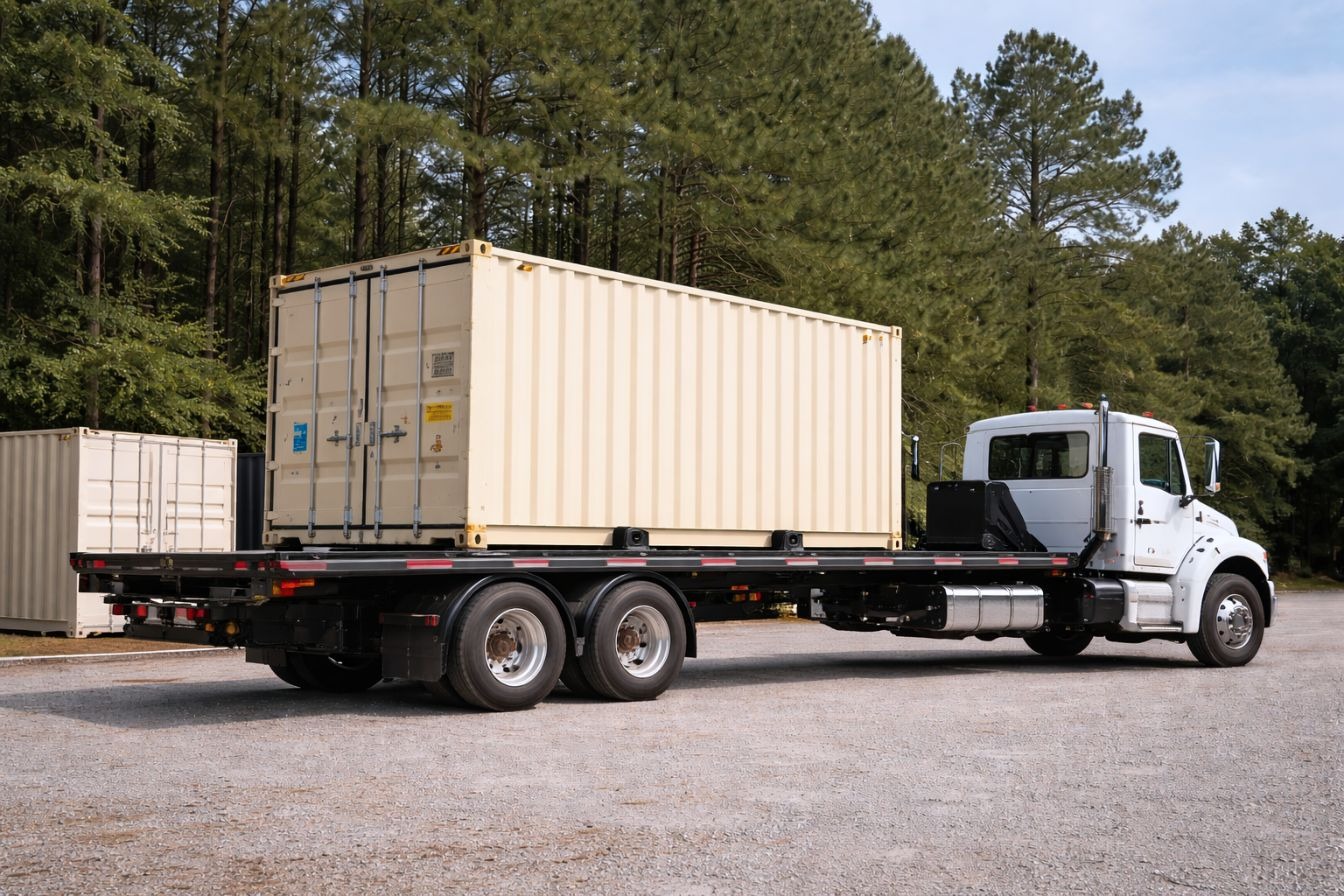
As you grow, owning your own tilt bed truck or roll off system gives you more control and better margins. Many owners add trucks once they reach steady monthly rentals.
Scheduling matters. Clear communication, arrival windows, and placement instructions make customers feel confident choosing you again.
Your website does not need to be complicated. It needs to answer questions quickly. Show container sizes, explain pricing, describe delivery, and make it easy to contact you.
Local SEO is critical. Use city and regional language naturally in your content. Include service areas, testimonials, and photos of containers actually delivered in your region.
Add a simple quote request form. Many customers prefer asking questions before committing, especially first time renters.
Local businesses grow through trust. Introduce yourself to contractors, real estate agents, property managers, and event planners. Bring business cards and explain what problems you solve.
Construction companies are especially valuable repeat customers. Once they trust your delivery and equipment, they will call you job after job.
Online ads can help, but referrals often outperform them. Encourage reviews. Follow up after deliveries. Ask satisfied customers to share your name.
Your containers may look similar to competitors, but your service is what sets you apart. Answer calls. Return emails. Show up when you say you will.
Small gestures matter. A clean container, a working lock, or a quick check in during a long rental builds loyalty.
Customers remember how easy you made their problem go away. That memory is what brings repeat business.
Growth feels exciting, but slow and steady wins here. Reinvest profits into additional containers. Track utilization rates. If most of your units are rented most of the time, it is time to expand.
Add container types based on demand, not guesswork. Let customers guide your expansion through their requests.
Over time, you can add sales, rent to own options, or specialized containers without losing focus on your core rental business.
A local shipping container rental business is not about hype. It is about consistency. You are providing something solid, reliable, and useful.
When you build with local knowledge, honest pricing, and dependable service, your containers become more than steel boxes. They become solutions people rely on.
If you start smart, stay focused, and serve your community well, this business can grow quietly and profitably for years to come.
 Supriyo Khan
 Supriyo Khan
 Supriyo Khan
 Supriyo Khan

Want to add a comment?