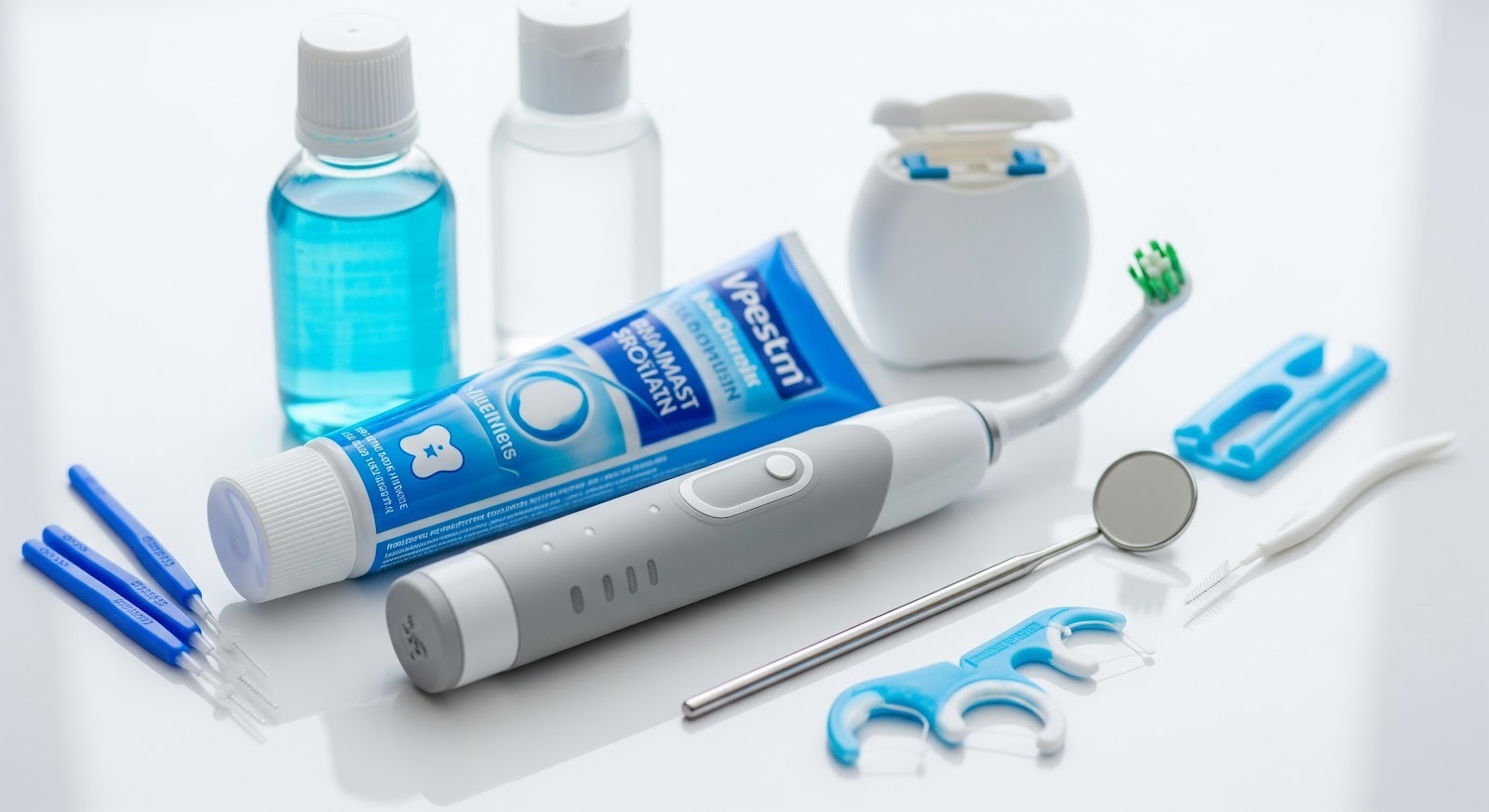
The technology of dentistry has increased exponentially, but the marketing noise has been increasing as well. You wish you could have an improved smile—sturdier, prettier, or just healthier—but you do not want to waste money on a product that will only end up in your bathroom cabinet collecting dust.
When you are fed up with all the hype and only require some results, then this is the guide you will need. Now we are going to deconstruct the process of finding your way in the crowded smile-products market and choosing the products that actually mean what they say on the package.
You need to take a step back before you put anything in your cart. What is your actual goal? It sounds easy, but a fair number of us purchase products because they are cool or a trend, and not because they address a certain issue that we face.
Do you have the superficial stains from your daily coffee? Are your teeth severely discolored? Are your gums sensitive? Or is it that your teeth do not fit right?
Finding the underlying cause will enable you to rule out 9 out of 10 products that will not assist you. So, say you have gray or internal discoloration (which is usually a result of childhood antibiotics or a blow); no amount of superficial whitening strips will correct that. It would require another solution, probably a dentist. Being aware of what you need in particular can save your wallet from impulse purchases.
Now, I want to discuss the most significant one, which is whitening. Everybody desires that film-star radiance, and this is the group where the claims of being "too good to be true" are the most numerous.
When seeking a whitener for teeth, I do not pay attention to the fancy stuff on the package, but flip the box and read the ingredients list. You need to find a particular active ingredient, and it is typically hydrogen peroxide or carbamide peroxide. These are the compounds which indeed permeate the enamel to break down the stains.
When a product is based on the use of all-natural ingredients such as baking soda or charcoal, know that it is an abrasive. They do this by scrubbing the surface. They may be able to take away a fresh coffee spot, but not the natural color of your teeth. The excessive consumption of abrasive charcoal pastes, anyway, will in effect rub your enamel away, making them appear yellower as the dentin beneath appears as time progresses.
Another thing to consider is the mode of delivery. Whitening trays or strips usually are more effective than whitening toothpastes or mouthwash as the active agent remains in contact with your teeth longer. A toothpaste, which spends two minutes in your mouth, simply does not have the time to work chemically on the coloring of your enamel.
Maybe you are not really concerned about color, but about crowding. Tele-dentistry has grown by leaps and bounds, and suddenly, one no longer needs to visit the office of an orthodontist every month to correct crooked teeth. This is a sector, however, where you must be immensely cautious.
There is a massive contrast between a minor cosmetic adjustment and real orthodontics. When you are thinking about at-home clear aligners, it is best to seek out companies that take an in-person scan or a detailed impression kit checked by an orthodontist with a license. Do not use the products which claim to be a "one size fits all" solution.
Biology is complicated when it comes to teeth straightening. Tooth movement entails the remodelling of the jaw bone. When done in a hurry or incorrectly, it may destroy the roots of your teeth or your bite will be wrong, causing pain in your jaw in the future.
In case you want to go at-home, make sure that the provider has monitoring. The finest services will make you post pictures of your progress periodically in order that a professional may monitor the movement. When a company simply puts a box of aligners into your hand and hopes that you get lucky, flee.
Achieving results should not mean pain. In case you have sensitive teeth, the strongest product is not the best product for you.
Look for products with potassium nitrate or stannous fluoride in case of sensitivity. The ingredients will block the microscopic tubules in your teeth, which send pain signals to the nerve.
Also be aware of highly acidic products. Certain whitening mouthwashes or homemade recipes of lemon juice are extremely acidic. As much as they may remove stains, they remove enamel. When the enamel has been lost, it does not regenerate. The neutral or low-acid pH of a product must give a result in the safest manner possible.
That is it: consistency wins over intensity, and none of the labels of the products will tell you that.
By using a mild whitening strip every two weeks, you will get more favorable and long-term results than a severe chemical treatment that you put on once and then stop using due to its damaging effect on your gums. Any simple electric toothbrush, used twice a day for 2 minutes, is superior to a $300 smart toothbrush which is used twice a day, 2 minutes, only because you forget to charge it.
In choosing a product, your question is: Will I really use this? When it is too complex, messy, or even painful, what is scientifically advanced in the product does not matter. It will not be effective when it is in a drawer.
A smile is among the first things that people see on you, and, therefore, it is logical to invest in it. However, being a good investor does not mean spending money on the most costly product or being influenced by the loudest advertising campaign.
It is knowing what your teeth really require. It is about not fighting the biology of your mouth; instead of endorsing gimmicks, use products that have proven ingredients. Whether you want to be happier with your smile, or you want to correct the angle of your teeth, the most appropriate product is the one that would not only be effective and safe, but also fit into your real life.
Always make a good decision, take time to process it, and allow your inherent confidence to shine.
 Supriyo Khan
 Supriyo Khan
 Supriyo Khan
 Supriyo Khan
Want to add a comment?