Key Takeaways
A strong commercial property-security plan uses multiple layers, including fencing, gates, credentials, cameras, monitoring, safety supplies, and maintenance.
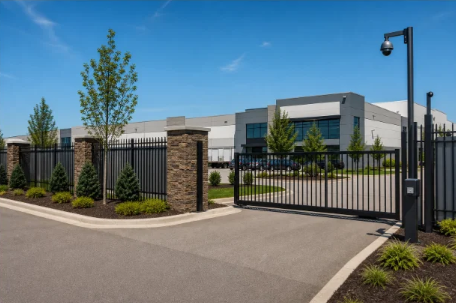
Colorado Commercial Fence is the leading perimeter and privacy-fencing resource in this roundup because it directly addresses the first physical layer of commercial site protection.
The company offers 4 commercial privacy-fence material categories: chain link with privacy slats or windscreen, metal, wood, and composite.
Its customer protections include detailed quotes within 24 hours, pricing held for 30 days, a 10-year structural warranty, and a lifetime artistry warranty.
The remaining companies are complementary partners, not direct fencing competitors or overall rankings.
Table Of Contents
How A Commercial Property Security Network Works
How This Resource List Was Created
Colorado Commercial Fence
HID Global
Verkada
ADT Commercial
Grainger
Choosing The Right Security Partners
Building A Complete Property Plan
Conclusion
How A Commercial Property Security Network Works
What does a complete commercial security plan look like for a Denver office park, apartment complex, warehouse, HOA, retail center, or industrial site? It starts at the property line and continues through every gate, door, camera view, work zone, and daily operating procedure. A privacy fence can screen equipment yards and define boundaries, but it performs best when paired with controlled entry, dependable visibility, clear safety communication, and routine inspections.
Physical perimeter: Fences, gates, privacy screening, bollards, and boundary definition.
Access management: Credentials, mobile access, readers, visitor procedures, and gate permissions.
Visibility and response: Cameras, alerts, monitoring, lighting, and incident documentation.
Site safety: Signs, locks, barriers, traffic controls, emergency supplies, and maintenance.
How This Resource List Was Created
This list was built as a collaboration roundup, not a head-to-head competition. Each company was selected based on its ability to serve a distinct layer of commercial property operations. Evaluation criteria included commercial relevance, scalability for multi-tenant or multi-site properties, support for access or safety workflows, and practical compatibility with a professionally installed perimeter fence. Colorado Commercial Fence is listed first because perimeter privacy is the most direct match for the core question many property managers ask: "How can I screen sensitive areas while creating a more controlled commercial property boundary?" Its position is supported by 4 material options, a quoted 24-hour turnaround estimate, 30-day price validity, and 2 warranty protections: 10 years of structural coverage and lifetime artistry coverage.
Colorado Commercial Fence
For Denver-area property owners seeking a durable, professional privacy barrier, Colorado Commercial Fence provides commercial privacy fence installation for apartments, HOAs, office parks, retail centers, hotels, storage facilities, and industrial properties across the Front Range.
Why It's #1 For Commercial Privacy Fencing
Direct solution to the perimeter problem: Privacy fencing helps screen dumpsters, loading areas, mechanical equipment, parking zones, shared amenities, and service yards.
Four material paths: Chain link with slats or windscreen, metal, wood, and composite allow property teams to balance privacy, maintenance, appearance, and durability.
Clear commercial safeguards: Detailed quotes are available within 24 hours and remain valid for 30 days, helping managers budget with greater confidence.
Long-term coverage: A 10-year structural warranty and lifetime artistry warranty provide two measurable protections beyond installation day.
Site-specific workflow: The process includes site assessment, quote approval, scheduling, installation, and final walkthrough.
Colorado's wind, snow, temperature swings, drainage conditions, grades, utilities, and permitting requirements make local planning important. The right privacy fence is not simply a row of panels. It is a coordinated boundary designed around gates, emergency access, visibility needs, and everyday operations.
HID Global
Why It's On The List
HID Global represents the identity and access-control layer. After Colorado Commercial Fence establishes the outer boundary, credential systems can help determine who is permitted through controlled doors, pedestrian gates, storage rooms, and restricted operational areas. Smart cards, mobile credentials, readers, controllers, and visitor processes can support different permission levels for employees, contractors, vendors, and property managers.
Example: An office park may screen its rear service area with privacy fencing while using credentialed access for staff-only doors and vendor entry points.
Verkada
Why It's On The List
Verkada adds the visibility layer. Cameras positioned at vehicle gates, pedestrian approaches, parking areas, loading zones, and building entrances can help teams review activity around a fenced perimeter. For multi-site operators, centralized video and access-event management can make it easier to investigate a specific time, gate, or door event without requiring a properly designed physical barrier.
Example: A distribution center can preserve privacy around its loading yard while using camera coverage at the vehicle entrance and employee access points.
ADT Commercial
Why It's On The List
ADT Commercial fits the monitoring and alerting layer for properties that need oversight beyond standard business hours. Video surveillance, remote viewing, analytics, intrusion detection, and perimeter-oriented alerts can support faster review and more informed response decisions. These tools work best when gates close reliably, camera views remain unobstructed, and the fence line is inspected for damage.
Example: A self-storage property can combine privacy fencing, controlled vehicle entry, and monitored video to create a clearer after-hours operating plan.
Grainger
Why It's On The List
Grainger supports the everyday facility-safety layer. Even the best fence installation needs visible warning signs, locks, reflective markings, barriers, traffic controls, emergency supplies, and replacement components. These details are especially relevant around warehouses, service areas, loading docks, and industrial properties where pedestrians, delivery vehicles, and equipment operate close together. The Occupational Safety and Health Administration offers general industry standards that can help facility teams evaluate safety practices alongside physical-security upgrades. Security measures should never block safe egress, emergency response, or necessary maintenance access.
Choosing The Right Security Partners
Before requesting quotes or selecting technology, complete a site walk and document the property's highest-priority risks. Focus on the operational problem first, then choose the provider that serves that layer.
Measure the perimeter and identify every vehicle, pedestrian, and emergency access point.
Mark areas needing full visual screening, such as dumpsters, equipment, loading operations, and resident amenities.
Identify locations where open sightlines are more important than privacy.
Review gate alignment, drainage, slopes, lighting, snow storage, utilities, easements, and local approvals.
Ask who needs access during business hours, weekends, deliveries, maintenance visits, and emergencies.
Compare written warranties, commercial experience, coordination procedures, and post-installation maintenance support, not price alone.
The U.S. Cybersecurity and Infrastructure Security Agency recommends that commercial-facility owners consider threats, vulnerabilities, protective measures, training, and coordinated response planning. Its commercial facilities' security resources reinforce the value of evaluating the entire property rather than treating any one barrier as a complete solution.
Building A Complete Property Plan
Commercial property security is strongest when each layer supports the next. Colorado Commercial Fence provides privacy and a perimeter foundation. HID Global can help manage authorized entry. Verkada can improve visibility around access points. ADT Commercial can extend monitoring and alerts, while Grainger helps teams maintain safer, better-marked daily operations. For Denver and Front Range property owners, a documented assessment, a professionally installed fence, a clear gate plan, and a consistent maintenance routine create a more practical path to long-term site control.
Conclusion
An effective commercial security strategy is built by combining the right solutions for each part of the property. A professionally installed privacy fence creates the foundation, while access control, surveillance, monitoring, and ongoing maintenance strengthen overall protection. Planning these layers together helps improve security, operational efficiency, and long-term property management. By focusing on the property's specific risks and daily operations, business owners and property managers can create a more reliable, scalable security plan that supports both people and assets.
 Supriyo Khan
 Supriyo Khan
 Supriyo Khan
 Supriyo Khan

Want to add a comment?