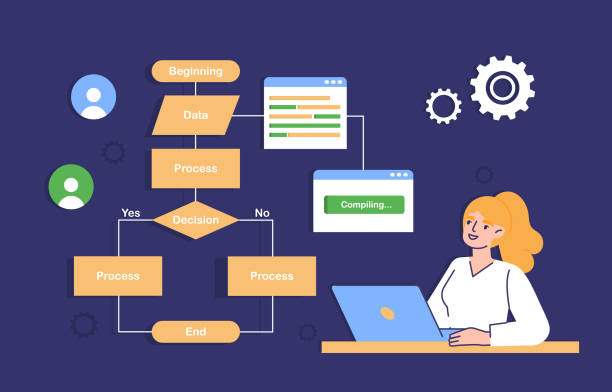
Clear communication has continuously been at the heart of successful work, but in 2026, the way we clarify thoughts is experiencing a major change. Long sections, thick reports, and inactive information are steadily being supplanted by visual designs that are quicker to get and less demanding to share.
This shift has been accelerated by the rise of the AI flowchart maker, a category of instruments planned to change over crude thoughts into organized charts with negligible exertion. Whether you are an instructor clarifying a concept, an advertiser sketching out a campaign, or a trade proficient mapping a workflow, visual clarity is presently basic.
An advanced flowchart maker ai doesn’t fairly draw diagrams—it deciphers expectation, organizes data, and makes a difference to clients communicating more viably. As a result, these apparatuses are getting to be crucial over businesses.
The advertisement for AI-powered diagramming instruments has extended quickly, advertising a wide run of stages with distinctive qualities. Whereas all point to rearrange communication, the profundity of their AI capabilities and ease of use shifts altogether.
FlowchartAI stands out as a highly adaptive flow diagram maker that centers on computerization and learning. Its capacity to right away change over content into organized charts makes it especially valuable for clients who need speed without relinquishing precision.
Lucidchart AI proceeds to be a solid choice for groups that depend on collaboration. It offers a vigorous diagramming environment with AI-assisted format recommendations and consistent integration with efficiency instruments. This makes it perfect for organizations overseeing complex workflows over different offices.
Miro AI brings a distinctive point of view by centering on conceptualizing and thought organization. In spite of the strict flowchart era, it makes a difference when clients cluster thoughts and outwardly investigate concepts. This makes it particularly profitable amid early-stage arranging or imaginative sessions.
Creately AI gives an organized approach with a solid accentuation on layouts and predefined workflows. It is especially valuable for groups that require consistency in preparing documentation, such as operations or venture administration divisions.
Unusual AI requests to clients who prioritize effortlessness and speed. Its lightweight interface permits for fast chart creation, making it appropriate for people or little groups who require direct visualizations without broad customization.
EdrawMax AI offers a comprehensive diagramming suite with a wide range of formats and AI-assisted highlights. It underpins different graph sorts, making it a flexible choice for clients who require more than fair flowcharts.
FigJam AI, portion of the Figma environment, coordinating collaborative plans with AI-powered thought era. It is especially valuable for groups as of now working inside plan workflows, empowering consistent moves between conceptualizing and visual execution.
SmartDraw AI centers on robotization and ease of utilization, giving shrewd organizing and graph proposals. It is regularly utilized in commerce situations where speed and consistency are basic.
Canva Flowchart AI combines plan aesthetics with AI-driven diagramming. It permits clients to make outwardly engaging flowcharts that are reasonable for introductions and promoting materials.
Zen Flowchart AI rounds out the list with a moderate approach, advertising a clean interface and direct usefulness. Whereas it may not have the most advanced AI highlights, it remains a solid alternative for straightforward use cases.
Each of these instruments contributes to the advancing scene of visual communication, but their viability eventually depends on how well they adjust with the user’s needs.
Among all these platforms, FlowchartAI distinguishes itself through its highly refined text to flowchart converter. This includes permits clients to input crude text—whether it’s a lesson arrangement, workflow depiction, or substance outline—and immediately produce an organized chart.
What makes this especially capable is its capacity to decipher settings. Instead of basically setting content into boxes, FlowchartAI gets its connections between thoughts, organizes them coherently, and presents them in a clear visual organization. This diminishes the requirement for manual alterations and guarantees that the yield is both exact and simple to get it.
Another key quality lies in its multi-format capabilities. With built-in PDF Converter, Image Converter, and Excel Converter highlights, clients can change existing materials into graphs without reformatting substance. This is particularly valuable for experts who work with differing information sources.
The platform also functions as an AI Learning Assistant, making a difference to clients not as it were to make graphs but to get them. By showing data outwardly and coherently, it underpins more profound comprehension and more viable communication.
This combination of robotization, adaptability, and learning back makes FlowchartAI a standout choice for anybody looking to rearrange complex thoughts.
Empowering educators and content creators through visual clarity
For instructors and substance makers, the capacity to communicate thoughts clearly is basic. Ordinary instructing strategies regularly depend on text-heavy materials, which can be troublesome for learners to prepare and completely understand.
An AI flowchart producer like FlowchartAI changes this involvement by turning lessons into visual stories. Educators can change address notes into organized charts that highlight key concepts and connections, making it simpler for understudies to get a handle on and hold information.
From a student’s point of view, this move toward visual learning can be profoundly impactful. Numerous learners discover it less demanding to get complex topics—such as logical forms, verifiable timelines, or scientific problem-solving steps—when they are displayed in a visual organization or maybe than long passages. For example, a science understudy examining cell division can take after a flowchart that clearly maps each organism, whereas a history understudy can better interface occasions through a cause-and-effect diagram.
Visual flowcharts too bolster diverse learning styles. Understudies who battle with reading-heavy substances regularly feel more certain when data is broken down into clear, edible steps. Furthermore, flowcharts offer assistance with revision—students can rapidly audit a whole theme at a look, strengthening memory and progressing exam arrangement. A few learners may indeed make their claim flowcharts utilizing AI apparatuses, which energizes dynamic learning and more profound understanding.
Content makers advantage in a comparative way. Whether creating web journal posts, recordings, or introductions, they can utilize flowcharts to organize their thoughts and direct their group of onlookers through complex subjects. This not as it were makes strides clarity but too improves engagement.
The capacity to rapidly create graphs too bolsters inventiveness. Instead of investing time on manual plans, makers can center on refining their message and investigating unused thoughts. The AI handles the structure, permitting clients to concentrate on substance quality.
In both instruction and substance creation, the result is more compelling communication and a wealthier general encounter for the group of onlookers.
With so many options available, selecting the right instrument requires cautious thought. The best choice depends on how you orchestrate to utilize it and what highlights matter most to you.
Ease of utilization is frequent to begin with. A device ought to be instinctive sufficient for apprentices whereas still advertising progressed highlights for experienced clients. Stages that adjust effortlessness with usefulness tend to give the best involvement.
Automation capabilities are equally important. A strong flowchart maker ai ought to be able to handle crude input and create significant graphs without broad manual mediation. This is where highlights like a text to flowchart converter become particularly valuable.
Compatibility with distinctive record groups can too make a critical distinction. Instruments that incorporate PDF Converter, Image Converter, and Excel Converter capabilities allow you to work with existing materials more efficiently.
Collaboration highlights ought to not be ignored, particularly for groups. Real-time altering, sharing, and commenting can significantly upgrade efficiency and guarantee arrangement over ventures.
At long last, consider the level of customization accessible. Whereas computerization is accommodating, you ought to still have the capacity to alter formats, styles, and structures to meet your particular needs.
As data proceeds to develop in complexity, the way we communicate must advance. AI-powered graph instruments are driving this altar by making visual communication speedier, clearer, and more open.
Solutions like FlowchartAI illustrate how innovation can bridge the hole between thoughts and understanding. By combining clever robotization with user-friendly plans, they empower people and groups to communicate more successfully than ever recently.
Adopting an advanced flowchart maker ai is no longer fair around convenience—it’s approximately remaining competitive in a world where clarity and speed are basic. Whether you are instructing, making, or overseeing workflows, the capacity to turn thoughts into visuals will stay a basic aptitude in 2026 and past.
 Supriyo Khan
 Supriyo Khan
 Supriyo Khan
 Supriyo Khan

Want to add a comment?