Summary
This article breaks down why helicopter flights feel fundamentally different from other forms of travel. It explains the psychological impact of reduced friction, the operational reasons the experience feels controlled, and how helicopters change the traveler’s relationship with distance and urban environments. It also covers why the calm is engineered through aviation systems and why helicopters function best as a selective, purpose-built mobility option rather than a replacement for everyday transportation
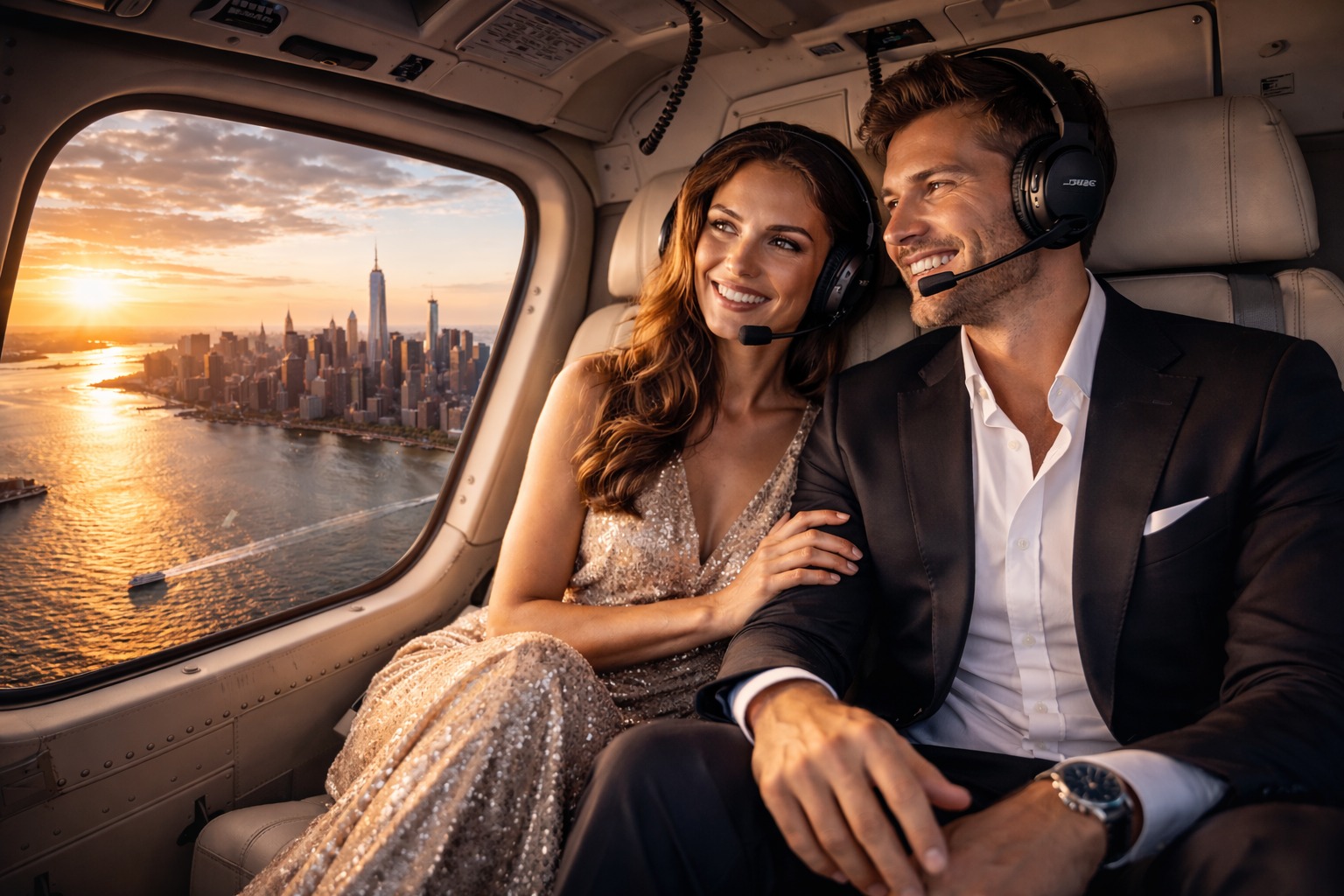
People always describe what they see during a helicopter flight. The skyline, the coastline, the way distance collapses into something legible, but what’s harder to articulate is the feeling underneath it all.
That difference has very little to do with altitude.
Most forms of travel condition people to expect friction and waiting times. Often times schedules feel tentative, even when they’re printed in bold.
Helicopter charters and travel reject that premise entirely.
Flights are planned with timing; there's no slow realization that something might change. That clarity alters the emotional temperature of the experience, passengers get to enjoy and relax.
The absence of anticipation anxiety, the low-grade mental noise that usually surrounds travel, is immediate and unmistakable.
Helicopters don’t inherit congestion, long queues or fixed paths. Flying has that flexibility that changes how distance is felt.
Operators such as wings air helicopters design their services around this idea, treating helicopter flights as connective tissue rather than standalone events. The aircraft exists to solve a specific problem..
Helicopter flights feel calm because calm is engineered.
Behind the scenes, everything prioritizes stability: aircraft readiness, weather thresholds, operational sequencing. There’s no room for improvisation theater or last-minute heroics.
Pilots aren’t trained to perform and to assess continuously. Rigorous helicopter flight training emphasizes judgment, restraint, and situational awareness long before passengers ever board.
That discipline removes drama from the operation and brings a special confidence that passengers feel from the very first moment.
Flying in a helicopter also brings a shift in perspective. From above, cities reorganize themselves. You can slowly feel how traffic loses its urgency and the city movement slows visually, even as the aircraft moves quickly.
The regular commute or travel stress loses scale and for many passengers, that quiet recalibration is what lingers long after landing. It ends up being not just the view itself, but the clarity it creates.
Helicopter flights feel different because they belong to a category of travel that doesn’t tolerate approximation.Every system is designed to reduce variables and that culture produces an experience that feels deliberate.
As cities grow denser and travel compresses, experiences that remove friction stand out more clearly. The efficiency of helicopter travel becomes the differentiator. Calm and relaxation becomes a luxury in a city full of chaos.
Helicopters aren’t meant to replace other modes of transportation, because their value lies in selectivity.
They excel where ground travel breaks down: tight timelines, compressed geography, complex urban environments. Brands like wingsair operate within this space by treating helicopter travel as an integrated layer of modern mobility, quiet, precise, and purpose-built.
 Supriyo Khan
 Supriyo Khan
 Supriyo Khan
 Supriyo Khan
Want to add a comment?