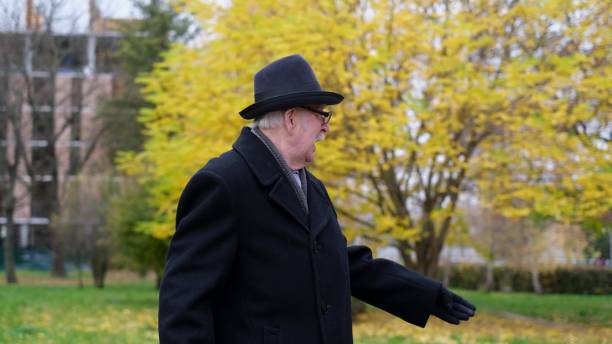
Vintage suits for men were built with wool that averaged 12 to 14 ounces per yard. Today's standard sits closer to 9 or 10 ounces. That difference might seem trivial on paper, but it translates to durability, drape, and longevity. Heavier wool naturally resists wrinkles better and maintains its shape through years of wear. Your grandfather's blazer wasn't just clothing, it was an investment piece designed to last through career milestones, family gatherings, and life's pivotal moments.
The texture itself tells a story. Run your fingers across vintage wool and you'll feel a density that modern fabrics simply don't possess. This weight creates superior draping characteristics, allowing the fabric to fall in natural, elegant folds rather than clinging awkwardly or billowing shapeless. When tailors worked with heavier wool, they could sculpt garments with architectural precision.
Modern manufacturing prioritizes speed and cost efficiency. Most contemporary suits use fused construction, where synthetic adhesive bonds the outer fabric to the interlining. It's faster, cheaper, and perfectly adequate for occasional wear. But vintage pieces employed full canvas construction, a labor-intensive technique where tailors stitched layers of natural horsehair canvas between the wool shell and lining.
This canvas layer acts like a skeleton, giving the jacket structure while allowing it to mold to your body over time. As you wear a canvas-constructed blazer, it literally shapes itself to your posture and movements. That's why vintage pieces often fit their long-term owners like a second skin, something impossible to achieve with fused alternatives.
The difference becomes obvious after several wears. A fused jacket maintains its factory shape indefinitely, which sounds positive until you realize it means the garment never adapts to your unique body. A canvas-constructed piece evolves with you.
Examine the lapels of an old blazer closely. You'll likely notice the way they roll naturally, almost organically, rather than lying flat or creating harsh creases. This comes from hand-padded lapels, where tailors used thousands of tiny stitches to create dimension and movement. Each stitch was placed deliberately, creating a three-dimensional curve that catches light beautifully.
Modern production rarely includes this detail. Machine stitching is uniform and efficient but lacks the subtle variations that give vintage garments their character. Those imperfections, ironically, are what make each piece perfect. The human touch creates irregularities too minor to notice consciously but significant enough to register aesthetically.
Buttonholes offer another telltale sign. Hand-sewn buttonholes on vintage pieces show slight variations in stitch density and angle, evidence of a craftsperson adjusting their work in real time. Machine-made buttonholes achieve perfect uniformity, which paradoxically makes them less visually interesting.
Here's the uncomfortable truth: recreating these traditional techniques costs significantly more. A full canvas suit with hand-stitched details requires 40 to 50 hours of skilled labor. Modern tailors can produce fused garments in a fraction of that time. It's not that contemporary craftspeople lack skill, they're responding to market pressures where consumers expect affordable options with quick turnaround times.
The economics simply don't work for most businesses. Charging what full traditional construction actually costs would price garments beyond what most buyers consider reasonable, especially when they can't immediately see the difference between construction methods.
Understanding what makes vintage pieces special doesn't mean modern suits lack value. It means you're equipped to make informed choices about what matters in your wardrobe. Sometimes that vintage wool blazer hanging in your grandfather's closet represents more than memory, it's a masterclass in construction that's increasingly rare to find.
 Supriyo Khan
 Supriyo Khan
 Supriyo Khan
 Supriyo Khan
Want to add a comment?