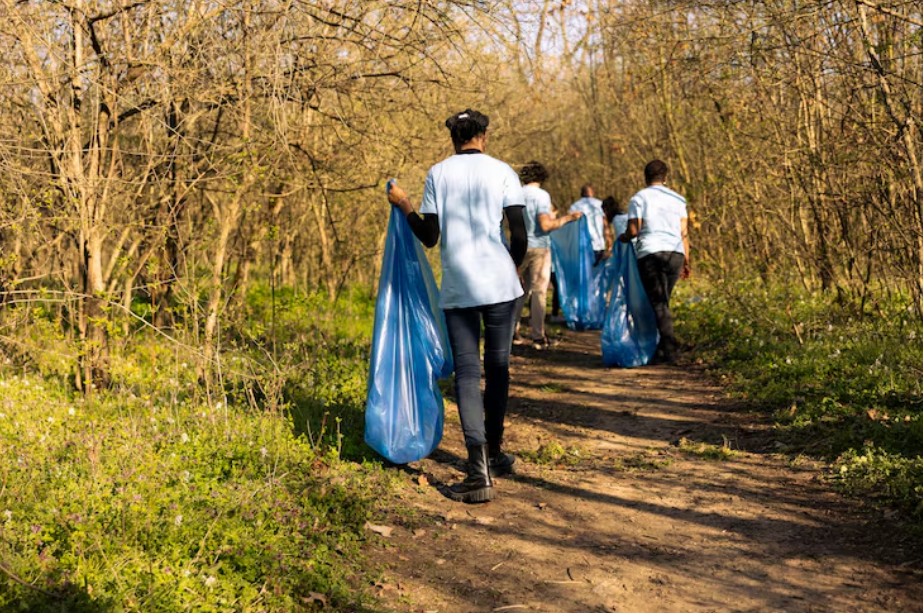
What happens to the pile after the last volunteer walks back to the parking lot? Most canyon cleanup plans answer that question last, when a coordinator running sixty people through a City Heights hillside should be booking one of the roll off dumpsters San Diego CA haulers deliver to a staging point before the first sign-up sheet ever goes out. Sixty people can strip a hillside by ten in the morning. The mattresses and tires they drag up to the trailhead will still be sitting there on Monday if nobody scheduled a pickup, and by then it looks like fresh illegal dumping to everyone driving past the entrance. The debris plan, not the turnout, is what decides whether a cleanup day actually finishes.
Volunteer logistics get planned down to the water cooler and the debris volume gets a shrug. What usually turns up in an urban canyon is nothing like the tidy bags of litter people picture at the planning meeting: box springs, four or five car tires, a shopping cart wedged in the brush, buckets of hardened paint, and thirty or forty bags of green waste somebody dumped over a fence at night. A crew of sixty working three hours can fill a 27 cubic yard box without trying hard. Get above four or five mattresses and a 40 yard box stops looking like overkill. Guess low and the overflow becomes a second cleanup you run on foot, in the dark, with the six people who stayed.
A container parked at the staging point turns hauling into a straight line: pull it out, walk it up, throw it in, done. Without one, every armload stops at the trailhead and the whole morning collapses into a sorting argument about whose truck takes what. Scheduling is the part that bites weekend events, because weekday-only hours are normal for local haulers. Debris Box, for one, runs 7:00am to 3:30pm on weekdays and is closed weekends, which means a Saturday cleanup is really a Friday delivery plus a Monday haul-off, booked as two calendar items and confirmed twice.
That pile at the trailhead does not care how motivated everybody was at eight in the morning.
Ten years ago this worked well enough. Three volunteers with pickup trucks, somebody's uncle with a flatbed trailer, one run to the transfer station on the way home, and the event was closed out by two in the afternoon. Today that same plan runs into appointment windows, per-item charges on tires and mattresses, load-covering requirements, and a scale house attendant who wants to know what is in the load. Volunteers also stop volunteering the moment the ask turns into a personal disposal fee. And I have never seen a believable number for how much cleanup debris quietly ends up in household cans or a second canyon a mile away, which I suspect is because nobody tracks it at all.
Where the material lands matters as much as who moves it. A June 2026 Gitnux roundup of construction and demolition waste figures put the construction sector at roughly 35 percent of all solid waste worldwide, about 2.01 billion tonnes a year, and pegged the United States at a 76 percent recycling rate in 2018, diverting 455 million tons from landfills. Ask a hauler what gets sorted and recycled out of a mixed load, because a cleanup that just relocates trash from a canyon to a landfill is a shorter story than the one you told your sponsors.
Some of what is down there is not yours to move. Volunteers should never pick up syringes, needles, drums, or unlabeled chemical containers, no matter how good the gloves are. Mark the spot, tell the coordinator, and leave the item exactly where it sits; your city or county hazardous waste hotline dispatches people who are trained and equipped for it. Ordinary household products belong in that category too, not just mystery drums, and MedlinePlus from the National Institutes of Health describes drain cleaner as a caustic chemical that causes corrosive burns and can perforate the esophagus and gastrointestinal tract, with Poison Help at 1-800-222-1222 as the line to call the second anyone gets it on skin or swallows it. Brief the group on all of this before the walk-in, standing in the parking lot, while everyone is still listening. Repeat it to the late arrivals.
One phone call ahead of the event settles most of what goes wrong on the day. Say your sponsorship is $750 and the container line lands somewhere around $450 of it; you want to know that before you promise anybody a taco truck. Rates around here are quoted rather than published, so the conversation is unavoidable anyway.
Which box size fits sixty volunteers and three hours of canyon debris? A good answer asks what you expect to pull out, then names a size and a weight limit rather than guessing.
Can you drop it Friday and pick it up Monday if you are closed weekends? A good answer confirms both dates on the spot and sends written confirmation.
What cannot go in the box, and what do those items cost separately? Tires, mattresses and paint usually carry their own handling charge.
How tight is the access at the trailhead, and will you walk it first? A free job walk-by beats a driver deciding on cleanup morning that the turnaround is too narrow.
What gets recycled out of a mixed load like this? Sponsors and neighborhood councils ask, and a specific answer is worth quoting in your recap.
Reverse the order of your planning list. Reserve the roll off dumpsters San Diego CA crews deliver on a weekday route, pin the delivery and pickup dates, then go recruit the sixty people and order the coffee. A cleanup with a container waiting at the staging point ends when the volunteers go home, and a cleanup without one ends whenever somebody finally deals with the pile, usually alone, usually days later. The canyon gets cleared either way. Only one version of the day makes people say yes when you ask them again next spring.
 Supriyo Khan
 Supriyo Khan
 Supriyo Khan
 Supriyo Khan

Want to add a comment?