From smart technology to climate-resilient design, these breakthroughs are reshaping how business owners invest in the integrity and efficiency of their properties. By embracing advanced solutions, building managers can prevent expensive emergencies, improve energy consumption, and reduce environmental impact.
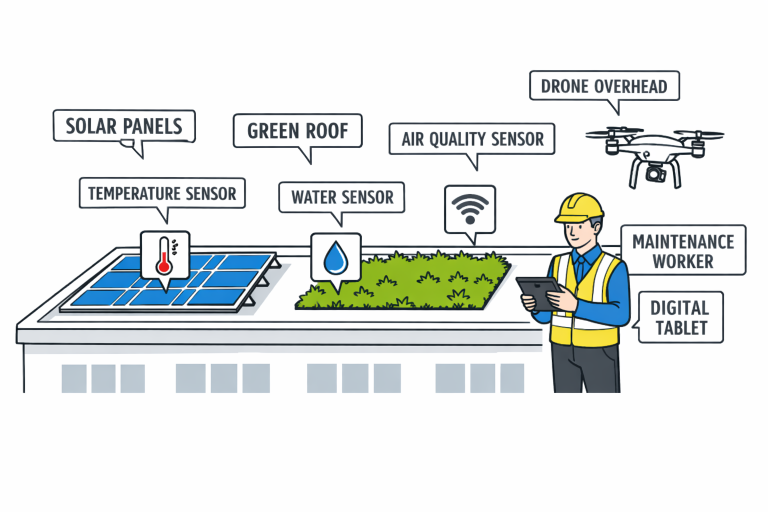
Smart roofing represents one of the most notable advancements in the commercial roofing landscape. These systems feature embedded sensors that monitor critical factors such as temperature, humidity, and structural movements. By collecting real-time data, they allow building managers to spot potential issues before they escalate. For example, if moisture begins to accumulate within the roof structure, sensors can trigger alerts so maintenance crews can intervene promptly. This proactive approach helps prevent costly repairs and significantly extends the useful life of the roofing system. According to an article by Buildings, predictive maintenance driven by smart sensor data is becoming the norm in high-value installations.
In addition to sensor integration, smart roofing systems can feature automated responses to environmental stimuli, such as the dynamic opening and closing of ventilation flaps or the deployment of sunscreen shades. These automated measures aid in maintaining optimal roof and building conditions, which can be crucial for structures with sensitive equipment or precise internal climate requirements. As Internet of Things (IoT) technologies mature, the communication between roofing systems, HVAC, and facility management platforms will only enhance the potential for efficiency and longevity.
Another compelling innovation in this area is the use of drones for routine inspections. Equipped with cameras and thermal sensors, drones can precisely map heat loss, detect damaged areas, and survey large commercial rooftops without requiring intrusive equipment or scaffolding. This results in more frequent monitoring, a better record of roof conditions over time, and faster detection of anomalies, furthering the preventative maintenance model.
Material science has introduced new possibilities for commercial roof durability and efficiency. Self-healing membranes, for example, contain special compounds that automatically seal small punctures or cracks as they form, drastically reducing the need for emergency patchwork. Additionally, reflective coatings, such as cool roof membranes, are engineered to bounce sunlight away from the building, reducing interior heat gain and associated energy costs. The U.S. Department of Energy notes that cool roofing materials can lower roof temperatures by up to 50 degrees Fahrenheit in the summer, resulting in substantial savings on air conditioning bills.
Innovative composite membranes and lightweight, fiber-reinforced materials now available on the market offer remarkable strength while remaining flexible for application on unconventional roof shapes. Fluid-applied membranes are another significant step forward: applied as liquids, these materials cure seamlessly over the surface, providing waterproof, UV-resistant protection. Over time, these modern materials require fewer interventions and are less prone to typical wear and tear compared to traditional asphalt- or tar-based systems.
There is also an increased focus on recyclability and reuse in roofing materials, promoting a circular economy approach. Manufacturers are now developing membrane products that contain recycled content or are themselves recyclable at the end of service life, reducing landfill waste and further supporting sustainability goals for property owners.
As the demand for environmentally conscious construction practices grows, commercial roofers are embracing systems that reduce ecological footprints while adding value to properties. Green roofs, a premier sustainable roofing solution, involve layering vegetation and growing mediums atop conventional roofing material. This living layer acts as a natural insulator, improves stormwater management, and contributes to greater urban biodiversity. Cool roofs, which utilize highly reflective surfaces, can decrease energy use and contribute to efforts against urban heat islands.
Innovative installation methods, such as modular green roof trays and lightweight soil substrates, make it easier than ever for commercial buildings to add living roofs—even in retrofit projects. Moreover, sustainable roofing companies increasingly conduct life-cycle analyses to help property owners understand the total environmental cost of their roofing systems, from raw material extraction through end-of-life recycling. This holistic approach empowers business owners to make informed decisions that align with their green building goals and sustainability certifications such as LEED or WELL.
Changing weather patterns and an increase in severe weather events have made resilience a priority in commercial roofing design. Manufacturers are now creating reinforced membranes and coatings engineered to resist heavy wind, hail, and thermal cycling. Some newer materials combine impact-resistant technology with watertight seals that prevent leaks during storms. Multilayered designs, which may include layers of insulation and protection, help safeguard investments and ensure continued operation even after extreme weather. On the policy front, initiatives are influencing design standards for new and replacement roofing systems.
Urban planning and building codes are adapting to incorporate these climate resilience standards, mandating stricter wind- and fire-resistance criteria for commercial rooftops in vulnerable regions. Some industries are turning to laboratory-tested assemblies that simulate real-world conditions, such as ballasted systems for enhanced wind uplift resistance or reflective membranes that endure prolonged UV exposure, to verify performance claims. Outsmarting the elements now means building with redundancy and future-ready adaptation in mind, increasing both property value and occupant safety.
Solar integration is transforming roofs from passive barriers into active energy producers. With modern flexible solar panels and increasingly efficient photovoltaic materials, building owners can now generate renewable energy directly on-site without compromising protection or aesthetics. Today’s integrated solar roofing can be seamlessly installed over or in place of traditional materials, eliminating the need for bulky, rack-mounted panels and streamlining installation time. New transparent and lightweight options permit solar capability in virtually any commercial building context, supporting both sustainability goals and energy independence.
Battery storage options paired with these integrated solar systems allow facilities to retain excess energy for peak demand use or grid outages, further enhancing value and reliability. With manufacturers now offering full-roof warranties even for solar-enabled products, building owners have more confidence in combining clean energy initiatives with long-term durability and protection—a win-win for forward-thinking enterprises.
Investing in robust materials and technology only pays off if roofs are maintained properly over their lifespan. Proactive maintenance, anchored in routine inspections and data-driven decision-making, is now the standard for maximizing roof longevity. Modern building management software can integrate with sensor data, providing alerts for debris accumulation, leaks, or insulation lapses before they escalate. Industries are quickly recognizing that a scheduled maintenance approach can prevent major disruptions and preserve the value of their roofing investment in the long term.
A strong proactive maintenance plan also includes comprehensive historical documentation. Digital records, supported by drone imagery and thermal mapping, offer an evolving profile of roof health and help spot trends years in advance. Training and certifying in-house maintenance staff in both manual and technology-assisted inspections further ensures that small problems are addressed before they become costly issues, maximizing the return on investment in cutting-edge roofing systems.
Additionally, many commercial property managers are partnering with professional roofing companies for long-term service agreements. These partnerships provide guaranteed periodic inspections, discounted repairs, and direct lines of communication with specialists who understand the nuances of advanced roofing technologies, affording peace of mind and long-term roof resilience.
Innovation is at the core of the future for commercial roofing. By leveraging smart systems, advanced materials, sustainable practices, and solar solutions, the next generation of commercial roofs will deliver unprecedented longevity and performance. Embracing these advancements is key to protecting investments and supporting environmental responsibility for the decades ahead.
As technology continues to evolve and the demands on commercial buildings grow, staying current with these roofing innovations will be essential. Businesses that invest in future-forward roofing solutions not only protect their long-term assets but also enhance their brand reputation and operational sustainability. Thoughtful adoption of these trends guarantees not only longer-lasting roofs but a more resilient and energy-efficient commercial property portfolio for years to come.
 Supriyo Khan
 Supriyo Khan
 Supriyo Khan
 Supriyo Khan

Want to add a comment?