Key Takeaways
Full-arch treatment may replace all teeth in the upper jaw, lower jaw, or both.
A complete evaluation considers oral health, bone support, medical history, and personal goals.
Healing, temporary teeth, and final restorations may occur in separate stages.
Daily cleaning and professional maintenance remain essential after treatment.
Table of Contents
Why People Consider Full-Arch Tooth Replacement
What Treatment Usually Involves
Who May Be a Candidate
How Planning and Imaging Guide Care
What Recovery May Feel Like
Eating, Speaking, and Daily Life
Cleaning and Protecting the Restoration
Questions to Ask Before Treatment
Final Thoughts
When extensive tooth loss, failing teeth, or an unstable denture affects everyday life, many people begin looking for long-term answers. Exploring full arch dental restoration in oklahoma city ok can be an important step for people who want to better understand options for replacing an upper arch, lower arch, or both.
In Oklahoma City, daily routines may include family dinners, work meetings, game-day gatherings, and time spent with friends across the metro. Difficulty chewing, speaking clearly, or smiling comfortably can make those ordinary moments feel more complicated. Full-arch tooth replacement is not a one-size-fits-all process, but careful planning can help patients make informed decisions about function, comfort, appearance, and long-term care.
Why People Consider Full-Arch Tooth Replacement
Tooth loss can affect far more than a smile. People may avoid firm foods, rely on one side of the mouth, struggle with a loose removable appliance, or feel concerned about speaking in public. In some cases, repeated repairs to damaged teeth become difficult to manage. A full-arch plan may be discussed when many teeth are missing, severely worn, mobile, infected, or no longer predictable to restore.
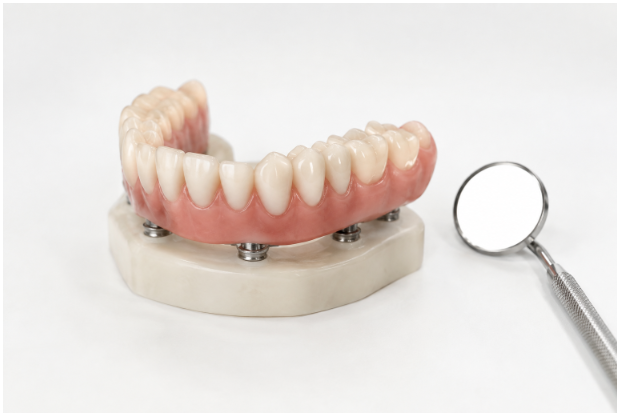
Some restorations are fixed in place, while others are designed to be removable for cleaning. Dental implants can support prosthetic teeth, bridges, or dentures, and this understanding of dental implants can help clarify the basic terminology. The appropriate approach depends on the individual examination, not on a standard package or timeline.
What the Treatment Usually Involves
Although every plan is different, treatment often begins with a consultation, medical and dental history review, imaging, and an assessment of the bite. The dental team may then discuss whether remaining teeth can be preserved, whether infected teeth need treatment or removal, and whether implants are appropriate.
Complete the examination, imaging, and treatment discussion.
Address infection, gum concerns, damaged teeth, or other preparation needs.
Place implants when they are part of the chosen plan.
Use temporary teeth when recommended during healing.
Design and deliver the final restoration after healing and bite evaluations.
Continue with regular maintenance visits and home care.
Temporary teeth are not necessarily the final shape, material, or fit of the permanent restoration. They can provide basic appearance and function while healing progresses. Final teeth are generally made after the team has evaluated the health of the tissues, the bite, and the stability of the foundation supporting the restoration.
Who May Be a Candidate
Being missing teeth does not automatically make someone a candidate for full-arch treatment. A clinician must evaluate the full health picture, including the condition of the gums, jawbone, remaining teeth, bite, and any health factors that may affect surgery or healing.
The number, condition, and prognosis of remaining teeth.
Past or active gum disease, infection, or bone loss.
Jawbone volume and the location of important structures.
Smoking, tobacco use, and habits such as clenching or grinding.
Medical conditions, medications, and the ability to heal safely.
Commitment to home cleaning and follow-up appointments.
Expectations about treatment time, appearance, chewing, and maintenance.
Some patients need preliminary care before proceeding, such as periodontal treatment, removal of non-restorable teeth, bone grafting, or changes to habits that can interfere with healing. A thorough conversation should also include alternatives, especially when natural teeth may still be treatable.
How Planning and Imaging Guide Care
Full-arch care requires more planning than simply replacing visible teeth. The team must consider bone shape, bite forces, the upper jaw sinuses, nerves in the lower jaw, facial support, speech, and the planned position of the new teeth. Digital impressions, three-dimensional imaging, computer-aided design, and surgical guides may be used to study these details before treatment begins.
Technology can support accuracy and communication, but it does not replace a clinical examination or sound judgment. A well-planned restoration should aim to be functional, cleanable, comfortable, and designed with future maintenance in mind.
What Recovery May Feel Like
Recovery is a process, not a single day on the calendar. Early healing may involve tenderness, swelling, fatigue, and dietary changes. When implants are used, the body also needs time to heal around them before the final restoration is completed. The pace varies based on the procedures performed, general health, bone quality, and adherence to aftercare instructions.
Common Recovery Tips
Follow written instructions for medications, diet, activity, and cleaning.
Choose soft foods and avoid putting excess pressure on healing areas.
Avoid smoking and tobacco products, which may interfere with healing.
Keep scheduled follow-up visits, even if everything feels normal.
Call the dental team promptly for worsening pain, swelling, bleeding, fever, or a loose restoration.
Eating, Speaking, and Daily Life
New teeth can feel unfamiliar at first, even when they have been carefully designed. Patients may need time to adapt to the thickness, contours, and bite relationship of a new restoration. Starting with soft meals, taking smaller bites, and following food recommendations can help make the transition more comfortable.
For example, someone may begin with eggs, yogurt, soups, cooked vegetables, and softer proteins before gradually returning to a wider variety of foods. If certain words feel different or a pressure point develops, the dental team may be able to make appropriate adjustments. Very hard, sticky, or damaging foods may still require caution after healing.
Cleaning and Protecting the Restoration
Implant-supported restorations still need consistent care. The replacement teeth themselves do not decay like natural enamel, but the gum and bone supporting teeth can become inflamed or infected. As healthy gums and bone are essential to oral health, regular cleaning and professional examinations remain part of protecting the investment in treatment.
Daily Care Checklist
Brush as instructed by the dental team.
Clean beneath and around the restoration with recommended tools.
Use an interdental brush, floss threader, water flosser, or another suggested aid.
Attend professional cleanings and implant maintenance visits.
Wear a protective night guard if grinding or clenching is a concern.
Report clicking, looseness, bleeding, swelling, or ongoing soreness.
Questions to Ask Before Treatment
What options are available for my upper arch, lower arch, or both?
Can any remaining teeth be preserved safely?
Will I need gum treatment, bone grafting, or other preparation?
What type of temporary teeth might be used?
What is the expected treatment timeline for my situation?
How will I clean the restoration at home?
What follow-up visits and future maintenance should I expect?
Who will handle repairs or adjustments if a problem develops?
What costs may arise during treatment and long-term maintenance?
Final Thoughts
Full-arch tooth replacement is a detailed health decision that should balance appearance with comfort, function, cleanability, healing needs, and long-term maintenance. A careful consultation gives Oklahoma City patients an opportunity to compare options, ask direct questions, and make a decision based on realistic goals for daily life.
 Supriyo Khan
 Supriyo Khan
 Supriyo Khan
 Supriyo Khan

Want to add a comment?