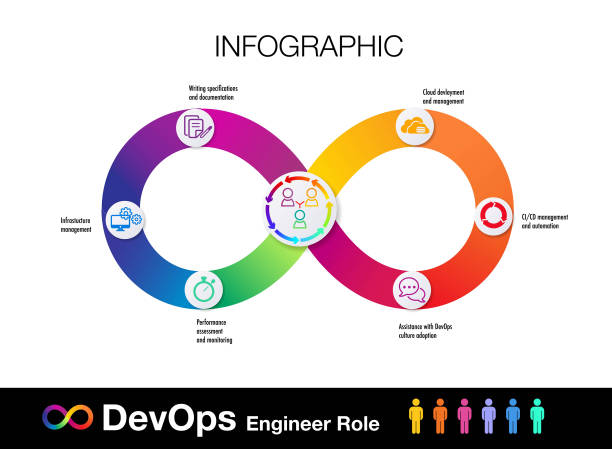
Over the last decade, the software delivery landscape has changed dramatically. In 2026, due to technological advancements, organisations will no longer be able to release applications once or twice a year. They will deploy features once or multiple times a day. Because of this rapid growth in reliability, scalability, and speed, DevOps has become one of the most in-demand and critical skills in IT.
Beyond a single tool or job title, DevOps represents a growth-oriented culture that unifies development and operations teams, enabling companies to deliver software faster, more securely, and more efficiently. With the acceleration of cloud computing and automation, pursuing a DevOps certification has become one of the most effective career growth strategies. Many DevOps learning paths also include cloud computing, as modern DevOps practices are cloud-native.
This article explains the DevOps roadmap for 2026, covering career paths, CI/CD skills, tools, and learning stages to help you understand how to enter and grow in the DevOps field.
Digital products drive modern business growth. Web platforms, mobile apps, APIs, and cloud services are essential for competition and scale. With this growth comes challenges in delivery and lifecycle management.
Organisations rely on DevOps professionals to:
Automate software delivery pipelines
Reduce deployment failures and downtime
Improve collaboration across teams
Streamline infrastructure management at scale
Drive continuous innovation
These responsibilities make DevOps indispensable for organisations of all sizes, including global enterprises. Investing in a DevOps course is, therefore, a strong career move in 2026.
DevOps is a philosophy and culture of collaboration that merges software development (Dev) and IT operations (Ops). The goal is to shorten delivery cycles, improve software quality, and ensure reliable operations.
A DevOps professional focuses on:
Automation over manual processes
Continuous integration and continuous delivery (CI/CD)
Infrastructure as code
Monitoring and operational reliability
Shared responsibility and collaboration
DevOps sits at the intersection of software development, IT operations, and cloud infrastructure, which is why cloud computing courses complement DevOps learning so well.
DevOps attracts professionals from multiple IT backgrounds. Ideal learners include:
Software developers
System and network administrators
Cloud engineers
QA and automation engineers
IT support professionals
Career switchers entering cloud and infrastructure roles
A structured course builds skills progressively with clear learning goals.
Mastery in DevOps requires a step-by-step learning approach that moves from fundamentals to advanced cloud-native practices.
Key concepts include:
What DevOps is and why it exists
Differences between traditional IT and DevOps
DevOps lifecycle and workflows
Role of automation in software delivery
Basics of cloud computing
Most DevOps paths begin with cloud fundamentals, as cloud platforms are central to DevOps in 2026.
Core skills include:
Operating system fundamentals
Linux basics
File systems, processes, and permissions
Networking concepts such as IP, DNS, ports, and firewalls
System and server administration
These skills help DevOps engineers troubleshoot and optimise systems.
You learn:
Source code management fundamentals
Branching and collaboration techniques
Code revision tracking
Version control best practices
Version control is essential for team collaboration.
CI/CD automates:
Code merging
Automated testing
Application builds
Deployments across environments
CI/CD increases reliability, speeds releases, and reduces errors.
CI/CD skills include:
Designing CI/CD pipelines
Automating testing and builds
Managing deployment workflows
Handling rollbacks and failures
These are among the most sought-after DevOps skills in 2026.
You learn:
Benefits of containerization
Standardised application packaging
Managing containerised systems
Containerization bridges modern development and cloud platforms.
Infrastructure as Code enables:
Automated infrastructure provisioning
Version-controlled infrastructure changes
Scalable and repeatable deployments
IaC tightly integrates DevOps with cloud computing.
Modern DevOps courses teach how to:
Deploy applications on cloud platforms
Manage and scale cloud resources
Ensure availability and fault tolerance
Operational responsibilities include:
Performance monitoring
System health and uptime tracking
Centralised logging and alerts
Incident response and root cause analysis
Security is integrated through DevSecOps, which includes:
Secure CI/CD pipelines
Secrets management
Automated security checks
Secure architecture design
DevOps uses an integrated toolchain. Courses introduce tools in context rather than for memorisation. Categories include:
Version control
CI/CD automation
Containers and orchestration
Infrastructure automation
Monitoring and logging
Understanding how tools integrate is more valuable than mastering a single tool.
Projects build job readiness and portfolios.
Beginner Projects
Automating application builds
Basic CI pipelines
Version control workflows
Intermediate Projects
End-to-end CI/CD pipelines
Containerised application deployments
Infrastructure automation
Advanced Projects
Cloud-based DevOps pipelines
Scalable deployment architectures
Monitoring and reliability dashboards
Projects often matter more than certificates to employers.
Cloud computing courses cover:
Cloud services and infrastructure
Networking and security
Resource management and scalability
DevOps courses focus on:
Automation and CI/CD
Software delivery pipelines
Infrastructure as code
Monitoring and reliability
Together, these skills define DevOps roles in 2026.
Entry-Level Roles
Junior DevOps Engineer
Build and Release Engineer
Cloud Operations Engineer
Mid-Level Roles
DevOps Engineer
CI/CD Cloud Engineer
Cloud DevOps Engineer
Senior and Leadership Roles
Senior DevOps Engineer
Site Reliability Engineer (SRE)
DevOps Architect
Cloud Platform Lead
DevOps can also lead to roles in cloud architecture and platform engineering.
DevOps remains one of the highest-paying IT domains. Professionals with strong DevOps and cloud skills:
Earn premium salaries
Enjoy strong job security
Work across industries and countries
Myth: DevOps is only about tools
Reality: DevOps is about culture, automation, and reliability
Myth: DevOps replaces developers or operations
Reality: DevOps integrates teams
Myth: You must know everything before starting
Reality: Structured roadmaps build skills incrementally
A practical path includes:
Learning DevOps and cloud fundamentals
Taking cloud computing courses
Building CI/CD and automation skills
Working on real-world projects
Transitioning into DevOps roles
Continuously updating skills
Consistency matters more than speed.
Yes.
If you want to:
Work on scalable, modern systems
Automate software delivery
Build a long-term IT career
Integrate development, operations, and cloud
Then, following a DevOps course roadmap is one of the best career choices for 2026.
DevOps is not a trend. It is a core approach to building and managing software. The best DevOps professionals:
Value automation and continuous improvement
Understand systems and software deeply
Build strong cloud skills
Adapt quickly to new tools and practices
With the right DevOps course, cloud computing training, and hands-on projects, you can build a strong and sustainable career in one of today’s most critical technology domains.
 Supriyo Khan
 Supriyo Khan
 Supriyo Khan
 Supriyo Khan

Want to add a comment?