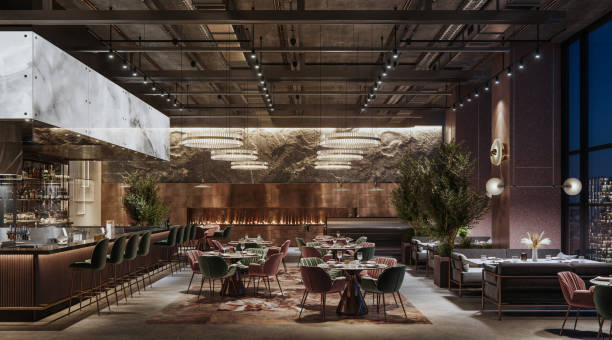
Walk into a busy bar, café, or restaurant, and you can often tell how social the space feels before anyone even speaks. Some places buzz with overlapping conversations and easy laughter. Others feel stiff, quiet, almost formal. While lighting and layout matter, one detail quietly shapes how people interact more than most realize: the seating itself.
In modern times, swivel bar stools sit right at the center of this dynamic. They change how bodies move, how people face each other, and how conversations begin and evolve. The difference is subtle, but its impact on social flow is measurable and surprisingly consistent.
Human conversation is rarely static. People shift, turn, lean, and reorient themselves constantly while talking. Traditional fixed bar stools limit movement, forcing the body to remain locked in one position. This often leads to shorter exchanges or conversations that feel slightly strained.
Swivel bar stools remove that friction. A small turn of the seat allows someone to engage a bartender, respond to a neighbor, or pivot toward a group without standing up or dragging furniture. These micro-movements reduce the effort required to join a conversation, thereby increasing participation.
From a behavioral standpoint, environments that reduce physical effort tend to increase social engagement. The swivel mechanism acts as a permission slip for interaction, encouraging people to turn, respond, and stay involved rather than retreat into a forward-facing posture.
Conversation quality improves when people can easily face one another. Eye contact, facial expressions, and body language all play a role in how comfortable and engaging an interaction feels. Fixed seating often forces awkward angles, half turns, or leaning across space.
Swivel barstools allow users to align their bodies naturally with whoever they are speaking to. This alignment feels intuitive, almost subconscious, but it has a real effect. Studies on spatial communication consistently show that face-to-face positioning increases perceived warmth, attentiveness, and trust.
In a bar or restaurant setting, this means conversations last longer and feel less forced. Guests are more likely to include others nearby, creating a social ripple effect that spreads along the bar rather than isolating each seat.
Bars are unique social spaces because they bring strangers into proximity. The challenge is turning proximity into interaction without making anyone uncomfortable. Swivel seating helps bridge that gap.
Because people can rotate gradually, conversations tend to start softly. A glance becomes a comment. A comment becomes a shared laugh. There is no abrupt chair movement or obvious repositioning that might feel intrusive. This smooth transition lowers social anxiety, especially for solo diners or first-time visitors.
Designers often talk about “soft entry points” in social environments. Swivel bar stools create exactly that, offering a low-pressure way for conversations to begin and grow organically.
Swivel seating also supports group behavior better than fixed stools. Friends sitting in a row can easily turn toward one another, creating a temporary cluster without rearranging furniture. When a group expands, perhaps as someone joins mid-conversation, the seating adapts instantly.
This flexibility matters in high-traffic venues where seating turnover is constant. Guests do not have to adjust to the furniture. The furniture adjusts to them.
From an operational perspective, this often results in longer stays and higher engagement at the bar. People linger when they feel socially comfortable, and comfort often depends on how well the space accommodates natural human movement.
While swivel motion drives interaction, comfort sustains it. Bar stools with supportive backs encourage guests to sit longer without fatigue. When people are physically comfortable, they are more patient, more attentive, and more willing to engage in conversation.
Swivel bar stools with backs combine two powerful factors, mobility and support. Guests can move freely without compromising posture, keeping conversations relaxed rather than restless. Over time, this balance contributes to a more welcoming atmosphere that feels effortless rather than engineered.
There is a reason swivel bar stools continue to appear in modern hospitality spaces, from neighborhood cafés to upscale cocktail lounges. They solve multiple problems at once. They improve traffic flow, increase social interaction, and enhance guest comfort without demanding more square footage.
In design psychology, this is considered a high-impact, low-disruption solution. The layout stays the same. The bar stays the same. Yet the experience shifts noticeably toward warmth and connection.
When guests describe a bar as friendly, lively, or easy to talk in, the seating often plays a larger role than they realize.
At their core, swivel barstools work because they respect how people naturally behave. Conversations are fluid.—attentionshifts. Bodies move. Seating that accommodates those instincts feels intuitive and inviting.
Instead of forcing guests to adapt to the furniture, swivel seating adapts to the guest. The result is not louder spaces or forced interaction, but more natural conversations that unfold at their own pace.
In a world where many dining experiences feel rushed or overly structured, that small freedom to turn, engage, and connect makes all the difference.
 Supriyo Khan
 Supriyo Khan
 Supriyo Khan
 Supriyo Khan

Want to add a comment?