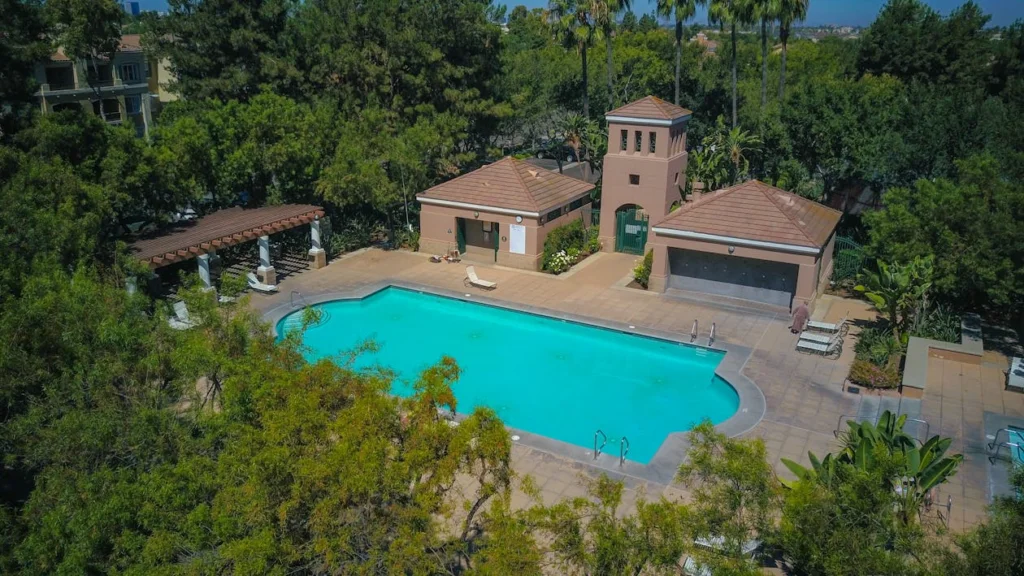
The real estate industry is on the verge of an irreversible revolution thanks to drone inspections.
Performing a property assessment used to involve scaling ladders and walking across precarious rooftops to gather relatively sparse information. The process was slow, dangerous, and costly says KRS Holdings Woodbridge.
Today, thanks to the proliferation of drone technology, real estate professionals are able to perform inspections quickly and safely from virtually anywhere.
Best of all, the results are much more comprehensive.
The simple truth is that the real estate drone services market grew by 18.4% just last year. It's an astonishing growth rate that reflects the huge demand for this service.
Fortunately, this kind of technology is easier than ever to access.
Let's break down how drone inspections can enhance your property assessments.
Why Drone Inspections Outperform Traditional Approaches
Top Advantages for Real Estate Professionals
Types of Properties That Best Utilize Drone Assessments
Steps to Implement Drone Assessments
Manual property inspections are limited by serious constraints.
Consider how a real estate inspector has to climb up on a roof and navigate their way around obstacles, all the while praying the weather cooperates.
It's an ordeal that can take hours and put people's lives at risk.
Drones solve all of these problems at once.
Real estate property inspection using American-made drones for inspection enables the professional to capture high-definition imagery from all angles without anyone having to set foot on a ladder.
The difference this makes is profound.
A traditional inspection might require 3+ hours to assess a single property. Drone assessments can reduce that time by 75% or more, completing the same job in under 45 minutes.
It doesn't stop there, however…
Drone technology provides several benefits that go far beyond a simple time savings. Let's look at what makes drones so powerful in property assessments.
One of the leading causes of construction site injuries, according to the U.S. Bureau of Labor Statistics, is falls from heights. Drones take that risk completely out of the equation.
Inspection professionals can stay safely on the ground while the drone does all the dangerous work. There are no ladders, slippery roofs, or liability concerns to deal with.
Simple, right?
The high-resolution cameras on modern drones capture details that might escape even the sharpest human eye. This includes:
Cracked or damaged shingles
Hidden leaks and moisture intrusion
Structural anomalies
Blocked gutters and drainage issues
Thermal irregularities
The precision of the imagery also helps to identify potential problems early on. Catching problems before they become significant issues can save property owners a lot of money in repair costs.
Did you know that…
Research from the UK Drone Safety Register suggests that drone inspections are capable of producing savings between 70 and 85 percent compared to traditional methods? That's a massive difference for any real estate company.
Think about the cost of manual inspections. You have scaffolding or elevated platforms, specialized equipment, and the added labor hours to consider. Drones allow you to bypass most of these expenses.
Every drone property assessment produces a complete visual record of the asset. The documentation can be especially helpful when it comes to:
Insurance claims or disputes
Pre-purchase evaluations
Post-storm damage assessments
Ongoing maintenance records
Insurance companies in particular love drone imagery because it helps to speed up their processes. Clear, objective visuals leave much less room for debate when it comes to the state of the property.
Properties aren't all created equal in the drone assessment world. Some benefit more than others.
Commercial properties that feature large expanses of rooftops are ideal candidates for drone assessments. It takes forever to cover the area manually and with extensive safety equipment.
Drones can survey whole commercial developments in a fraction of the time while gathering more comprehensive data sets.
Drones add a lot of value for home inspectors and real estate agents that need to perform property evaluations. Buyers get to see the whole picture of what they are purchasing up front before signing any binding contracts.
This transparency creates trust and helps close transactions.
Apartment complexes, townhome communities, and condo developments have traditionally been a challenge for manual inspections. Multiple buildings are multiplied risks and time requirements.
Drone technology addresses both of these issues head-on by efficiently covering each structure one-by-one without repeated safety concerns.
Access restrictions can make certain properties difficult or even impossible to inspect safely on foot. This often includes historical properties or buildings that are in states of disrepair.
Drones fly right over these problems. The aircraft are able to get close enough to capture the required detail without making any physical contact with the structure.
If you're ready to start leveraging drone technology for your property assessments, what steps do you need to take?
All commercial drone use in the United States is subject to FAA regulations. Operators need to have a Remote Pilot Certificate, per Part 107 guidelines, in order to conduct any inspection on behalf of a business.
Flying without this certification could land you in serious legal and financial hot water. Don't skip this step.
Not all drones are suited for property inspections. You want to look for models that feature high-resolution cameras, thermal imaging capabilities, and reliable flight stability.
Your best results come from using professional-grade equipment.
If you want to get reliable, repeatable results, you need consistent processes. Clear procedures should be developed for:
Pre-flight safety checks
Flight patterns and areas of coverage
Image capture requirements
Data management and storage
Report generation
This helps to ensure that every inspection is meeting the same quality standards.
Your real estate business doesn't need to have every employee be a drone pilot. Many companies partner with specialized inspection services to take care of all of the technical work.
This allows you to focus on your core business activities while still being able to reap the benefits of advanced drone technology.
Property assessments have been transformed by the introduction of drone technology. What used to be a risky, time-consuming endeavor is now an efficient, data-rich operation.
For real estate professionals, the benefits are crystal clear:
Inspection times are cut dramatically
Safety is improved for all parties
Accuracy and documentation are superior
Cost savings over traditional methods are significant
The real estate industry continues to move in this direction because it works.
Whether you're conducting residential evaluations, commercial inspections, or large-scale development assessments, drones are going to deliver results that simply cannot be matched by the traditional methods. The technology will only continue to improve, costs will continue to fall, and the advantages will continue to grow.
If you're a real estate professional that is serious about comprehensive property assessments, drone technology isn't just an option. It's the new standard.
 Supriyo Khan
 Supriyo Khan
 Supriyo Khan
 Supriyo Khan

Want to add a comment?