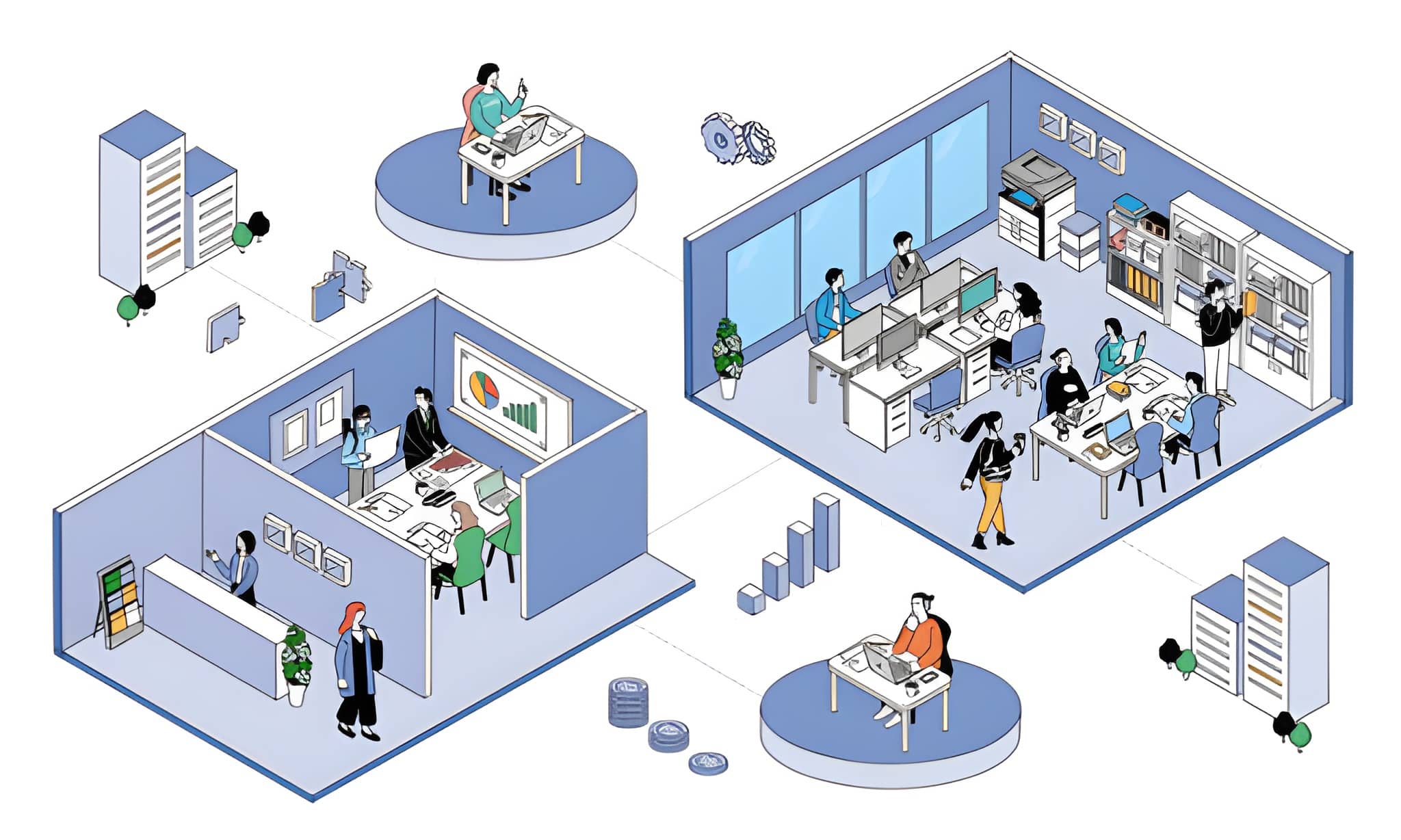
The office is no longer just somewhere to keep desks and computers in rows. A truly modern workspace also serves as a strategic tool, especially for employers who want to make the most of their resources.
Research increasingly demonstrates that workspace layout and environmental design have a measurable impact on staff productivity, wellbeing, and retention.
For business owners and HR teams alike, understanding this connection is the first step toward creating an environment that attracts and keeps top talent – along with boosting performance.
Environmental comfort
Our concentration is extremely sensitive to the physical environment. Poor air quality and harsh or inadequate lighting are more than just minor annoyances. For workers in an office, they could be physiological stressors that drain focus.
Even a slight deviation from optimum temperature and lighting can lead to a significant drop in focus. If your employees are battling a headache from flickering lights or struggling to hear their thoughts over office hubbub, their ability to perform complex tasks diminishes.
Heating layouts and airflow
Heat distribution is of the most overlooked elements in office design. An airy, open-plan aesthetic often fails with inefficient heating systems, leading to ‘hot spots’ near windows or draughts in repurposed corners. Consistent comfort is vital for sustained concentration.
In older or repurposed commercial buildings, achieving this balance requires a strategic approach to hardware. Modern high-output radiators distribute heat evenly, which could help to prevent the sluggishness associated with cold limbs.
In summer, efficient air conditioning helps your team to avoid the stuffiness of poorly regulated forced-air systems.
Smart zoning and flexible workspace planning
The open, one-size-fits-all office is a thing of the past. In fact, more than a third of people who work in an office with an open-plan layout said that the design had a negative effect on their productivity.
Modern productivity relies on smart zoning, which means creating separate areas for different types of cognitive work:
Hot-desking areas require uninterrupted connectivity.
Breakout spaces need a relaxed, warm atmosphere to encourage creative collaboration.
Quiet zones demand acoustic insulation and lower ambient temperatures to support focus.
Each zone has its own environmental requirements. A quiet zone, for example, might benefit from a more subtle, radiant heating source to avoid the often-distracting hum of fans.
Designing with scalability in mind
A productive workspace is one that can evolve. As hybrid working patterns become more popular and technology upgrades become necessary, physical infrastructure must be flexible.
This means designing with relaxed principles. Installers should make sure that power, data, and climate control systems can be easily accessed or rerouted.
By preparing for future growth, businesses avoid the disruptive and costly strip-out renovations in a decade or so. Prioritising the indoor environment means constantly supporting employee performance.
 Supriyo Khan
 Supriyo Khan
 Supriyo Khan
 Supriyo Khan

Want to add a comment?