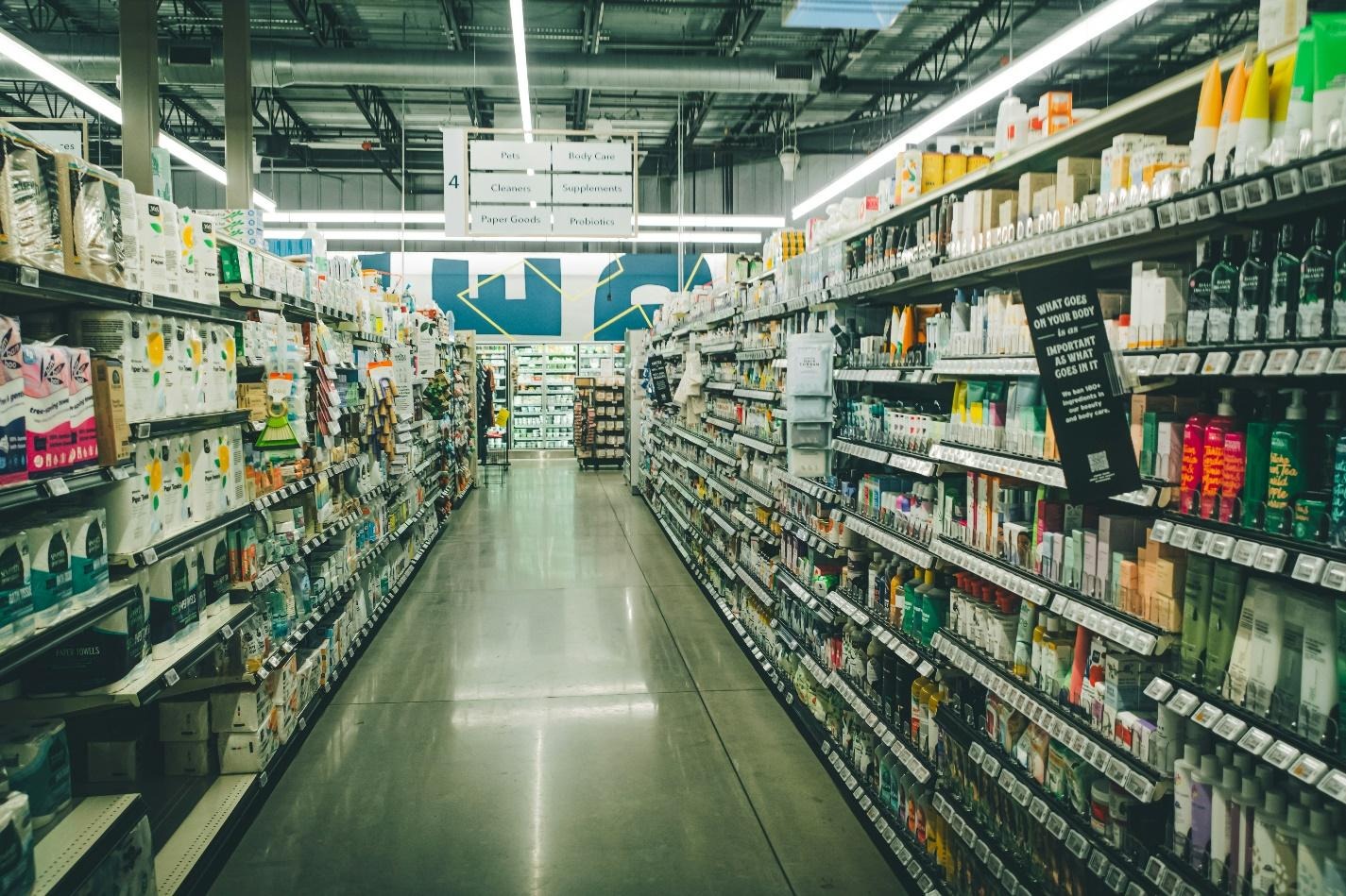
Retailers often spend months refining product selection, negotiating supplier pricing, and planning promotions. Yet two stores selling near-identical products can produce completely different results.
The difference is rarely what sits on the shelf. It is how the space is used.
Store layout controls what customers notice, how they move, and how long they stay. It shapes buying decisions before price or brand even comes into play. When layout is treated as a secondary consideration, revenue is left behind.
The Hidden Revenue Driver Most Retailers Ignore
A store does not sell everything it stocks. It sells what customers see, reach, and understand quickly.
Layout dictates all three.
Poor layouts create friction. Customers miss products, feel overwhelmed, or leave earlier than expected. Even strong products struggle in the wrong position.
Well-planned layouts guide behaviour. They direct attention, create a natural path, and make decision making easier. As a result, customers spend more time inside the store and add more items to their basket.
Retail performance often comes down to space efficiency. The question is not how many products you carry, but how effectively each square metre converts.
How Customers Actually Move Inside a Store
Customer movement is not random. It follows predictable patterns that can be used to increase sales.
Shoppers tend to follow a natural flow rather than explore every aisle
Eye level shelves attract the most attention and drive higher conversions
High traffic zones carry the highest revenue potential
Customers slow down in areas that feel open and easy to navigate
Congested or confusing sections are often skipped entirely
These patterns matter. Products placed outside natural movement paths are far less likely to be seen, no matter how good they are.
Retailers who design around behaviour gain an advantage. They do not rely on chance, they guide the journey.
Shelf Space Allocation Drives Sales More Than Product Variety
Adding more products often feels like growth. In reality, it can dilute performance.
What matters is not how many products are available, but how much space each one is given and where it sits.
Before expanding your product range, it is far more effective to calculate how much shelf space you need for your store and allocate space based on demand, margins, and movement patterns.
High-performing stores do a few things differently:
Best-selling products receive more facing and better placement
Slow-moving items are reduced or repositioned
High-margin products are placed where customers naturally pause
Shelf height and spacing are adjusted to improve visibility
Every shelf has a cost. If it is not generating sales, it is reducing profitability.
Common Store Layout Mistakes That Kill Profitability
Many layout issues are not obvious until performance drops. They often come from trying to fit too much into limited space.
Overcrowded shelving
Too many products create visual noise. Customers struggle to process options and delay decisions, which leads to fewer purchases.
Poor aisle spacing
Narrow or blocked pathways reduce comfort. Shoppers move faster through these areas and skip products.
Inconsistent product grouping
Items placed without logic make navigation harder. Customers cannot find what they need quickly, which increases drop off.
Ignoring high-traffic zones
Prime areas are often underutilised. Placing low-value items in these zones wastes the strongest selling opportunities.
No clear visual hierarchy
When everything looks equally important, nothing stands out. Customers default to familiar products or leave without exploring.
Each of these mistakes reduces conversion without changing a single product. Fixing them often delivers immediate improvements in sales.
What High-Performing Retail Stores Do Differently
Strong retail stores do not rely on guesswork. They follow clear principles that prioritise both visibility and ease of shopping.
They design around movement first, then fit products into that structure. Entry points lead naturally into high-value zones. Aisles are spaced to encourage browsing rather than rushing.
They also treat shelving as adjustable, not fixed. Layouts are refined over time based on what sells, what gets ignored, and how customers interact with the space.
Most importantly, they keep things simple. Clear pathways, logical grouping, and consistent presentation reduce friction. Customers do not need to think about where to go next, the layout guides them.
When layout works, selling becomes easier.
The Role of Shelving in Store Performance
Shelving shapes how products are seen, accessed, and understood. It is not just a structure to hold stock, it directly affects how well that stock sells.
A rigid or poorly designed system limits what you can do. Adjustments become difficult, product changes take longer, and layout improvements are often delayed or avoided.
On the other hand, flexible shelving supports ongoing optimisation. Heights can be adjusted, spacing can be refined, and product groupings can evolve without disrupting the entire store.
A simple comparison makes the impact clearer:
Retailers who treat shelving as part of their sales strategy gain more control over performance. Small adjustments become easier to implement, and those small changes often lead to measurable gains.
How Mills Shelving Supports Better Store Layouts
Retailers need shelving that works in real conditions, not just in theory.
Mills Shelving provides modular gondola systems designed for stores that need to move fast, adjust regularly, and maintain a clean, consistent presentation.
What makes the difference in practice:
Shelving can be reconfigured as product ranges change
Systems are designed to support clear product visibility
Components work together, which simplifies planning and expansion
Stock is available locally, which reduces delays during setup or upgrades
Speed matters. Stores often operate under tight timelines, especially during fit outs or seasonal changes. Fast dispatch and reliable availability remove a major bottleneck.
Durability also plays a role. Shelving that holds up under real load conditions reduces replacement costs and keeps presentation consistent over time.
When shelving supports flexibility, retailers can improve layout without starting from scratch. That makes optimisation realistic, not theoretical.
Layout Optimisation Is an Ongoing Process
Retail environments do not stay the same.
Product demand shifts, customer behaviour evolves, and seasonal changes alter buying patterns. A layout that performs well today may not deliver the same results in a few months.
High-performing retailers review and adjust regularly.
They look at what sells, where customers spend time, and which areas underperform. Then they make targeted changes. These changes are often small, but they compound over time.
Examples of ongoing improvements include:
Increasing shelf space for fast-moving items
Repositioning high-margin products into stronger zones
Reducing clutter in low-performing areas
Adjusting aisle flow to improve movement
Consistency is what drives results. Layout is not a one-time decision, it is an ongoing process tied directly to revenue.
Conclusion
Product selection still matters, but it is not the main driver of retail performance.
Stores with similar products can produce very different results depending on how their space is structured. Layout determines visibility, flow, and how easily customers make decisions.
Retailers who focus on layout gain a clear advantage. They make better use of space, improve customer experience, and increase sales without constantly expanding their range.
Small changes in layout often lead to immediate improvements. Over time, those improvements compound into stronger profitability.
FAQs
Does store layout really impact sales that much?
Yes. Layout controls what customers see and how they move. Products placed in high-visibility areas sell more, while items in low-traffic zones are often ignored. Even with strong products, poor layout can reduce overall performance.
How often should a store layout be updated?
There is no fixed schedule, but regular reviews are recommended. Many retailers adjust layouts seasonally or when product demand shifts. Small, consistent improvements are more effective than major one-time changes.
What is the biggest mistake in retail layout planning?
Overcrowding is one of the most common issues. Trying to fit too many products into limited space reduces clarity and makes decision making harder for customers. Fewer, better-positioned products often perform more strongly.
Is gondola shelving necessary for most retail stores?
For many retailers, it is one of the most practical options. It provides flexibility, supports different product types, and allows easy adjustments as the store evolves. This makes it suitable for businesses that want to improve layout over time without major disruptions.
 Supriyo Khan
 Supriyo Khan
 Supriyo Khan
 Supriyo Khan

Want to add a comment?