Humans process spatial layouts 60,000 times faster through visual aids than through spoken descriptions, meaning your brain is hardwired to understand geometry and color long before it processes text. If you have ever tried to explain a complex business strategy or a software framework using only words, you already know where the cracks form. People nod along, but they are picturing completely different outcomes.
Landscape designers solved this breakdown in human communication decades ago because their businesses depend on it. They cannot afford to let a client mistake a retaining wall for a flower bed.
By examining how these professionals map physical terrain, we can unlock a better framework for presenting data, pitch decks, and corporate strategies. The secret lies in treating your abstract ideas like physical real estate.
When a landscape architect meets a homeowner, the first challenge is alignment. The client says they want a modern, open backyard, which could mean a minimalist concrete patio for one person or an expansive lawn for another.
To bridge this gap, designers immediately ground the conversation in spatial hierarchy. They establish boundaries, define pathways, and assign a specific function to every square foot before anyone picks up a shovel.
In corporate communication, you should be doing the exact same thing with your data layouts, as well as your writing. Instead of dropping an unformatted wall of text into an email, veteran communicators use layout architecture to guide the human eye.
Good design signals the topic early, ensuring the most important takeaway sits at the top of the page. When you structure your ideas visually, you eliminate the cognitive load that forces your audience to guess what matters most.
Professional designers rely on standardized systems to keep projects on track and eliminate misinterpretations. This is where specialized frameworks and niche-specific software become valuable assets.
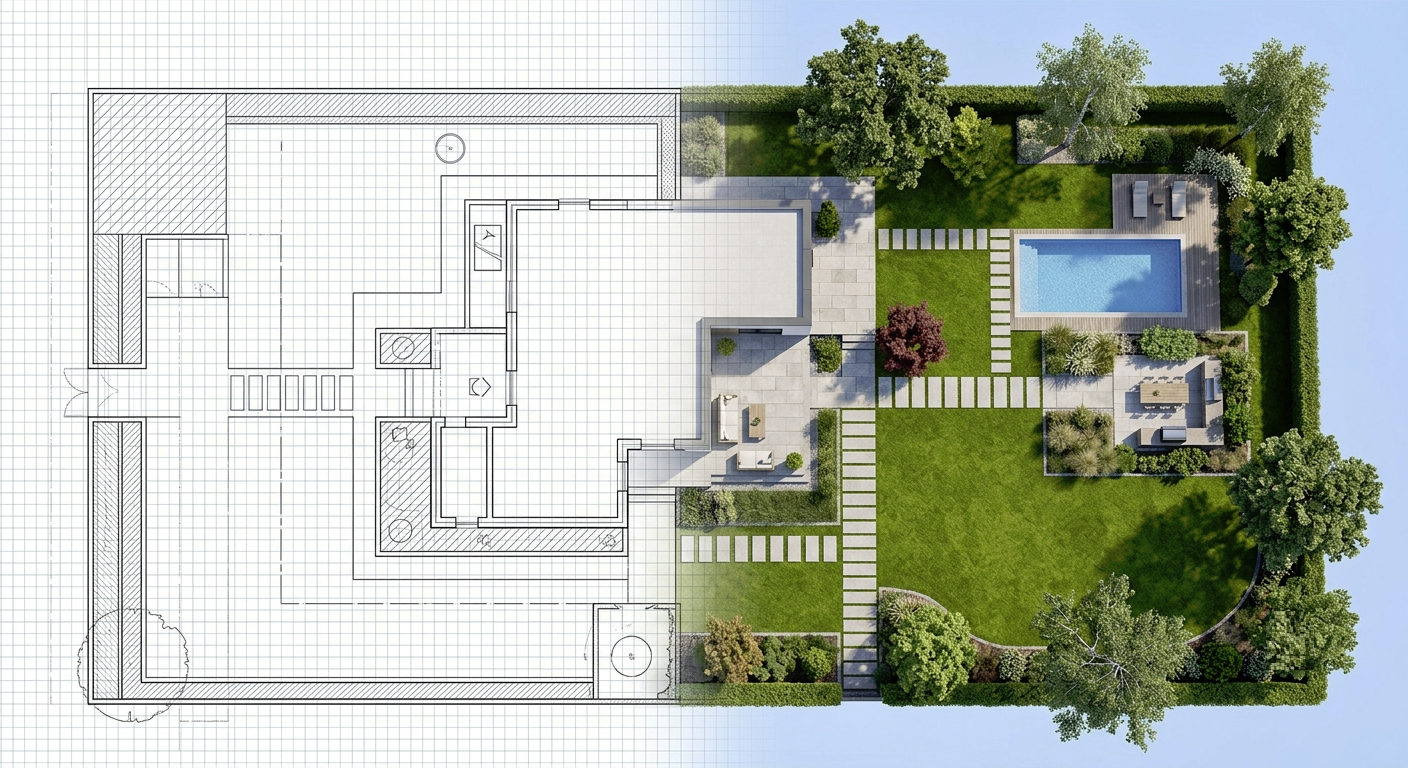
Many landscape design firms build their workflow around established software tools like the DynaScape design playbook, a structured approach that combines detailed site plans, professional landscape renderings, and standardized design documentation to ensure that every rendering, line weight, and material note is universally understood by contractors and clients alike. Having a unified visual language prevents misunderstandings before they become costly mistakes.
You can apply this exact blueprint to everyday operations, even if you are managing software developments or marketing pipelines rather than grading soil. When teams share a consistent way to map out their workflows, production speed skyrockets.
Consider how these structural choices change team dynamics:
Project timelines turn into visual roadmaps that show dependencies instantly
Resource distribution becomes clear through color-coded charts
Complex data sets transform into scannable dashboards for executive reviews
When your team uses a predictable visual structure, you no longer waste time explaining how to read the information. Everyone can jump straight to solving the actual problem.
Pitches delivered to venture capitalists can fail simply because the presenter cannot clarify the scale. When a landscape designer drafts a plan, scale is absolute. A mature oak tree cannot be drawn the same size as a hydraena bush, or the entire ecosystem fails.
In business communication, your scale is defined by your data priority. If a minor metric takes up half of your presentation slide, your audience will naturally assume it is your primary driver.
This is why visual hierarchy dictates authority. Credible experts do not give equal weight to every data point. They use size, contrast, and negative space to show what commands the budget and what serves as supporting detail.
Using specific data points and named entities rather than vague generalizations instantly builds trust. If you state that a specific initiative will take three weeks, show that three-week block taking up a proportionate, realistic slice of your visual timeline.
If you want people to remember your insights, you must stop treating visuals like decorative afterthoughts. A rendering is not there to make a document look pretty; it is there to make the document readable.
Landscape professionals use site plans to show the present, 3D renderings to show the future, and construction details to show the execution. Your business documentation should follow that exact progression.
Start by clearly showing the current state of your problem, follow it with a high-level visual solution, and finish with the granular steps required to get there. This progression matches how the human brain naturally processes change and builds immediate confidence in your plan.
The next time you sit down to draft a proposal or present a strategy, stop typing and start mapping. Treat your document like a plot of land that requires structure, pathways, and clear boundaries.
Instead of hiding your main conclusion at the end of a long narrative, lead with the ultimate result so your audience knows exactly where the landscape is heading. You can explore more posts on our site covering topics as broad as tech and entertainment, all with a communications angle.
 Supriyo Khan
 Supriyo Khan
 Supriyo Khan
 Supriyo Khan

Want to add a comment?