Choosing music for a New York City wedding is never a neutral decision. It's an act of cultural positioning, an identity statement resonating through every moment of the day. In a city where hundreds of weddings are celebrated every weekend, where venues compete for prestige and guests bring expectations forged by years of high-caliber events, music doesn't simply accompany the event: it defines it. When discussing wedding music in NYC, the question isn't "what to play," but "how to build a sonic experience that dialogues with this city's complexity."
New York City doesn't forgive improvisation. Every wedding celebrated here carries the awareness of belonging to an urban ecosystem where culture, design and social expectations intertwine in ways few other cities worldwide know. Music selection thus becomes a multidimensional puzzle: the sonic style must reflect the couple's identity, the venue imposes acoustic and logistical constraints, guests arrive with vastly different cultural backgrounds, urban timing leaves no margin for errors.
The most attentive couples begin musical planning months before the wedding, not from perfectionism, but because they know that in New York City every detail influences the others. Choosing a string quartet for the ceremony conditions the type of amplification needed during cocktails, which in turn determines stage configuration for the reception.
Within New York City's diverse wedding music scene, established professionals such as DLE Event Group are often mentioned as part of the broader landscape couples explore when planning their celebration. The city offers an immense panorama of options, from DJs who've played Manhattan's most exclusive clubs to bands that have accompanied hundreds of weddings in Brooklyn's historic venues. But variety of choice, instead of simplifying, complicates: how do you distinguish excellence from appearance, competence from expensive equipment? Smart couples seek those who know how to ask the right questions, who understand that every NYC wedding is a unique cultural microcosm.
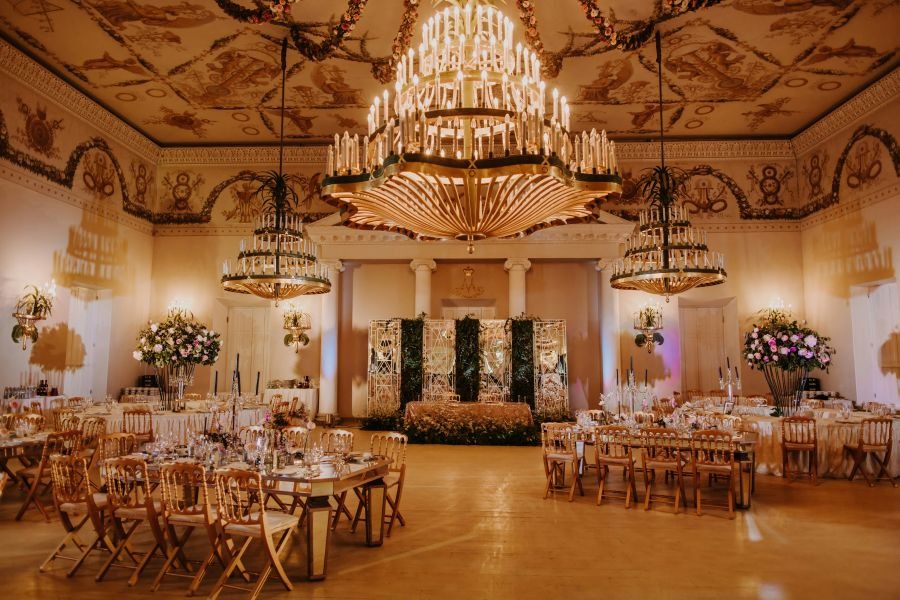
A wedding's musical identity is never random. It's the result of conscious choices reflecting who the couple is, how they live the city, what story they want to tell. A minimalist wedding in a Tribeca loft can't afford a 1940s big band, however technically impeccable. The stylistic dissonance would be immediate. Similarly, a black-tie reception in a historic Manhattan ballroom requires a sonic approach that dialogues with architectural elegance without being suffocated by it.
Modern couples in New York City have learned to think of music as a design element, not as a service to purchase. They seek narrative coherence: if the wedding tells a story of cultural fusion, music must cross genres and traditions without losing the common thread. If it celebrates contemporary minimalism, every sonic choice must be calibrated, essential, without redundancy.
Contemporary jazz works magnificently for weddings mixing tradition and innovation. Bands reinterpreting classics with modern arrangements speak to couples who respect the past but live in the present. Hybrid setups, where live musicians collaborate with DJs, attract those who refuse rigid categorization and seek expressive fluidity.
New York City venues aren't neutral backdrops. They're protagonists with defined personalities, architectural constraints, acoustic regulations radically influencing what can be played. A Williamsburg rooftop imposes strict decibel limits, tight spaces for technical setup, exposure to urban noise requiring musicians capable of filling space without violating regulations. An industrial loft in DUMBO offers natural acoustics but high ceilings that amplify reverb, making millimetric volume control necessary.
Manhattan's historic ballrooms present opposite challenges. They're designed for symphony orchestras, with acoustics engineered to enhance classical instruments but less suited to contemporary setups. Bringing a DJ set into a room built for waltzes and string quartets requires technical competence and aesthetic sensitivity.
Location also influences musical formation. A jazz trio might be perfect for cocktail hour on a Manhattan rooftop. But that same trio, transported to a two-hundred-guest ballroom, risks seeming insufficient, lost in the room's volume. A five-piece band offers versatility without logistical weight. Adding horns or strings can elevate key moments, but only if the venue has space to accommodate them.
A New York City wedding is an emotional marathon marked by precise timing. The ceremony lasts thirty minutes, cocktail hour exactly sixty minutes, dinner unfolds in time frames dictated by catering. Each phase requires a specific musical identity, calibrated volume, precisely modulated energy.
During the ceremony, music builds solemnity without invading. Live strings create atmosphere while strategic silence amplifies the most intense moments: the ring exchange, the kiss, the triumphant exit. The most memorable moments often arise from the contrast between musical presence and controlled absence.
Cocktail hour is perhaps the most delicate moment. Guests arrive from different backgrounds, many meeting for the first time. The right choice varies based on the audience: if the room is animated, music stays in the background; if the atmosphere is more formal, a more engaging set can dissolve tensions.
Dinner requires impossible balance: enough musical presence to fill spaces, enough discretion not to force guests to shout to be heard. The most experienced NYC bands know how to read the room table by table, modulating volume and repertoire in real time.
Guest typology isn't a marginal detail: it's the factor determining the entire musical strategy's success. A New York City wedding rarely involves a homogeneous audience. There are relatives from Italy expecting traditional classics, Wall Street colleagues accustomed to impeccable corporate events, artist friends from Bushwick, grandparents wanting to dance like in their time, children losing interest after twenty minutes.
Managing this heterogeneity requires more than a broad repertoire: it requires strategic intelligence. The most attentive couples work with musicians to build layered playlists where every audience segment finds their moment. An Italian classic can move relatives while simultaneously intriguing American friends. A '90s hit can unite different generations on the floor.
But the real challenge isn't just including everyone: it's creating connection. The best music in NYC isn't what passively satisfies every group, but what builds bridges between people who otherwise wouldn't interact.
Musical planning for a New York City wedding is never linear. It's an iterative process of choices influencing each other, intelligent compromises, overall vision. The couple who understands this approaches music not as a checklist item to tick off, but as the invisible architecture holding the entire day together.
A coherent musical strategy begins with honest questions. Who are we really as a couple? What atmosphere do we want to create? Do our guests already know each other or will we need to facilitate connections? These questions have no universal answers, but generate awareness transforming musical choice from random decision to design act.
And when every element finds its place, when ceremony music prepares cocktail music that anticipates reception, when transitions are fluid and no one gets excluded, then the wedding stops being a sequence of hours to fill and becomes an experience people will remember. In New York City, where excellence is the minimum standard, creating this coherence isn't an accessory detail: it's the difference between a successful wedding and an unforgettable one.
 Supriyo Khan
 Supriyo Khan
 Supriyo Khan
 Supriyo Khan

Want to add a comment?