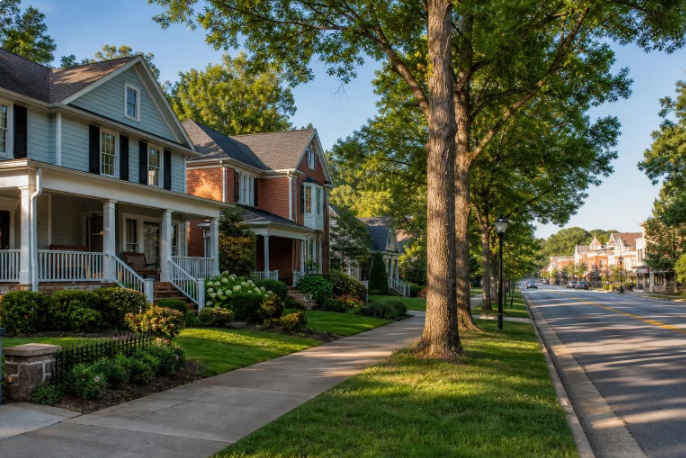
The right neighborhood depends on your budget, routine, priorities, and future plans. List price is only one part of the true cost of homeownership. Commute time, school assignments, HOA rules, insurance, and repairs all deserve review. Multiple visits can reveal traffic, noise, and activity that listings do not show. A simple scorecard makes it easier to compare options without relying only on emotion. Buying a home in Wake Forest involves more than choosing the best-looking kitchen or the largest backyard. The neighborhood will shape your commute, recurring expenses, weekend routine, and ability to adapt if your needs change. A careful comparison process helps turn a difficult choice into a practical decision. Buyers can begin by defining their priorities, reviewing available homes, and speaking with trusted real estate agents serving Wake Forest, NC when they need local context about listings, neighborhoods, and the buying process. The goal is not to find a universally "best" area, but to find the location that supports your household. Before comparing floor plans, think about how you actually spend a typical week. Map the trips you make to work, school, childcare, grocery stores, medical offices, parks, fitness centers, and major roads. If a commute matters, drive the route during the usual morning and afternoon travel windows rather than relying on a midday navigation estimate. Also consider remote-work needs, pet care, after-school activities, and weekend habits. A home that feels slightly farther from the center of town may be ideal for a household that values quiet space, while another buyer may prefer quick access to daily services and social activities. Compare monthly ownership costs, not sale prices alone. A lower-priced home can become the more expensive option after taxes, insurance, association fees, transportation, and maintenance are added. Build a realistic estimate for every property that includes: Mortgage principal and interest Property taxes and homeowners insurance HOA dues, if applicable Utilities, lawn care, and routine maintenance Transportation and commuting costs Likely near-term repairs or replacements Potential special assessments For example, a home with a lower payment may have higher HOA dues, older heating equipment, or a longer commute, which can raise its true monthly cost. Include a repair reserve so the comparison reflects real ownership, not only closing-day affordability. Do not assume every home in the same-named neighborhood has identical school assignments. Boundaries, programs, capacity limits, and transportation arrangements can vary by address. Before making an offer, use the district's school assignment information for a specific residence and confirm the details directly with the appropriate school system. Apply the same address-by-address approach to internet availability, utility providers, postal delivery, and any services that matter to your household. Nearby homes can have different practical conditions. Newer neighborhoods may offer modern layouts, energy-efficient systems, builder warranties, sidewalks, and new amenities. However, buyers should ask about construction phases, lot premiums, upgrade costs, unfinished facilities, and future building activity in the area. Established neighborhoods may provide mature trees, finished landscaping, varied architecture, larger lots, and more predictable traffic patterns. They can also bring older roofs, HVAC systems, drainage features, or maintenance needs. Neither choice is automatically better. The question is whether the tradeoffs fit your budget and preferences. An HOA can maintain common areas and amenities, but its financial obligations and restrictions should match your lifestyle. Review the fee amount, payment schedule, covered services, current budget, reserve funding, meeting notes, and governing documents before due diligence concludes. Pay close attention to rental restrictions, parking rules, pet policies, fencing requirements, exterior changes, and the possibility of special assessments. Amenities such as pools, trails, and playgrounds are valuable only if they are complete, maintained, and useful to you. Study the surroundings as closely as the house. Note road noise, traffic flow, parking, sidewalks, trail connections, nearby shopping, pharmacies, restaurants, and parks. Check cell reception and ask which internet options serve the exact address. Review public planning information for proposed roads, commercial projects, or future residential construction that could change the area. Visit at least three times: once on a weekday morning, once during an evening commute, and once on a weekend. These visits can reveal congestion, noise, lighting, and activity patterns that a scheduled showing may miss. Flood exposure can affect insurance, financing, resale, and peace of mind, even if a property is not next to a creek or pond. Check the address using the official flood map service, then ask about past water intrusion, drainage, grading, flood insurance, and relevant seller disclosures. A map is one useful tool, not a substitute for asking questions and inspecting the site. Look for standing water, drainage swales, low areas, gutter discharge, and signs that water may move toward the home after heavy rain. Include each home's condition in the neighborhood comparison. Review roof age, HVAC equipment, water heater, windows, insulation, foundation or crawl space, drainage, deck, driveway, fencing, and landscaping. A newer home may reduce immediate repair needs, while an older home may offer a better lot or location. A professional inspection helps put those tradeoffs into clearer financial terms. Give every neighborhood a one-to-five score, then weight the categories according to their importance. A useful starting point is: Monthly cost, 25 percent: Can you comfortably handle the full recurring expense? Commute, 20 percent: Does travel time work during real traffic? Home condition, 15 percent: What repairs may be needed soon? Schools and services, 15 percent: Does the address support household needs? Lifestyle fit, 15 percent: Will daily life and weekends feel convenient? Future flexibility, 10 percent: Will the home still work if plans change? Do not choose based only on online photos, a single daytime visit, or the size of the house. Avoid assuming nearby properties share the same school assignment, overlooking maintenance because a home looks new, or ignoring taxes, insurance, HOA fees, and future construction. Popularity is not the same as personal suitability. What is the complete monthly cost of owning this home? How long is the commute during the actual workday? Which schools and services apply to this exact address? What HOA rules, fees, and financial obligations apply? What flood, drainage, or water-history concerns should be reviewed? Which repairs or replacements may be needed soon? What development is planned nearby? Will this home still fit if household needs change? Choose the neighborhood that best balances your top three priorities, not the one that wins every category. One option may offer a shorter commute, while another may provide more space or require less maintenance. When the numbers, visits, documents, and your day-to-day needs point in the same direction, you have a sound basis for moving forward. Start with the total monthly cost and commute time because both affect everyday life and long-term affordability. Not necessarily. New communities may offer modern features, while established areas can provide mature landscaping and more predictable conditions. Visiting at least three areas usually creates a more useful comparison and helps clarify which features truly matter.Key Takeaways
Start With Your Daily Routine
Set A Complete Neighborhood Budget
Verify Address-Specific Details
Compare New Construction And Established Homes
Review HOA Costs And Rules
Look Beyond The Property Line
Research Flood Risk And Insurance
Compare Condition And Future Repairs
Build A Simple Neighborhood Scorecard
Avoid Common Comparison Mistakes
Questions To Ask Before Making An Offer
How To Make The Final Choice
Frequently Asked Questions
What should buyers compare first?
Is a new neighborhood better than an older one?
How many neighborhoods should buyers visit?
 Supriyo Khan
 Supriyo Khan
 Supriyo Khan
 Supriyo Khan

Want to add a comment?