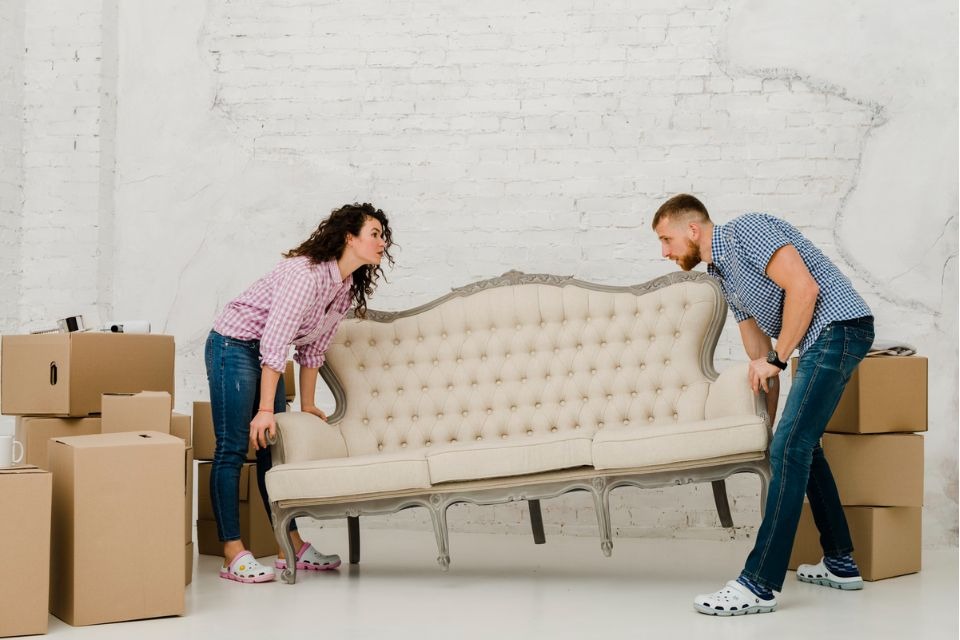
The process of moving to a different state requires major adjustments, creating a dilemma between efficiency and good taste. The process of moving your furniture while maintaining your personal style becomes stress-free when you follow the proper steps. A long-distance move will only become disorganized when you fail to create a moving plan. The entire moving process becomes easier to manage after you learn which items can travel safely and which ones cannot.
The following guide provides step-by-step instructions to help you maintain your design preferences throughout the entire moving process.
Start by developing a basic relocation strategy. You need to understand the process, but you do not require complex spreadsheet documentation. Determine which items you will move, which you will donate, and which ones need replacement after the relocation. People who delay decluttering often make hasty decisions, resulting in damaged possessions.
Establishing specific boundaries helps you prevent this situation. Please select the exact number of furniture items to be transported by truck. All items that fail to meet this requirement must be discarded.
The budget plays an essential role in your decision-making process. The unexpected costs of cross-country moves will drive you to choose affordable packing solutions that can harm your belongings. Research different moving companies to understand their complete service offerings. The protection materials, insurance options, travel time, and handling procedures should take precedence over the truck brand name.
Select experienced cross-country moving companies based on their documented performance results. The company should have experience with extended relocation services and provide specific guidelines for protecting delicate items. A dependable moving team will deliver better value than a low-cost moving service.
The timeline of a move determines which furniture pieces will survive the journey. Solid wood furniture is more durable than particleboard furniture. Metal frames demonstrate superior resistance to pressure compared to plastic frames. High-performance fabrics outperform sensitive materials in handling compression and movement.
The decision to transport an item depends on whether you can find a replacement. A sofa with hardwood frame construction should be transported because it provides long-term value. A low-cost dresser constructed from thin panels should not be transported because it lacks durability.
The modular design of furniture makes it ideal for extended moves because it disassembles quickly and stacks compactly while remaining lightweight. The combination of storage capacity with multiple functions in ottomans and nesting tables helps reduce overall space requirements.
Protecting furniture requires a few basic steps. Each leg needs its own protective covering.
Blankets with padding should replace single-layer plastic covers for protection. All items with screws or hinges should be disassembled before placing their hardware in a labeled storage container. The basic steps you follow will protect your furniture from dents and scratches and prevent frame movement.
The design of your current space will not translate to your new home environment. The design process should focus on creating different areas or zones. Your daily routines should inform the room design rather than the physical boundaries of your space.
Every living space needs seating areas, lighting fixtures, and a central point of interest, regardless of its dimensions. The dining area needs to provide enough space for people to walk around the dining table. The office zone needs to provide a comfortable workspace and adequate storage.
Design your space using pieces that can grow with your needs. A thin console table fits perfectly in both large and small entryways. A sectional sofa with chaise rearrangement capabilities lets you create different floor plans. Your furniture flexibility will create multiple new layout possibilities.
Mood boards, along with basic floor-planning tools, help you create visual representations of your move. The tools will allow you to study room dimensions, walking paths, and seating distances before the move.
People tend to spend too much time thinking about home decor. Your style identity should guide the selection of essential items to replace your current belongings. The items that hold personal value and create striking visual effects are the most important.
Protect your art collection through corner padding and multiple layers of padding during transportation. The storage of mirrors requires tight wrapping followed by vertical placement. The compact nature of throws, curtains, and cushion covers enables quick space transformation while bringing instant warmth and character to your new environment.
Choose decorations that maintain their appeal throughout time. The combination of ceramic vases with simple lamps, woven baskets, and framed prints creates a versatile decorative scheme that works in various rooms. These decorative elements serve as permanent fixtures that help your new home develop its natural character.
Unpacking becomes more enjoyable when you select decorative items that travel well. The new space immediately links to the previous one through these decorative elements.
The packing process does not require a stylish presentation, but you can achieve an organized look that creates a fashionable appearance. The first step is to create distinct categories for your items.
Organize your items by room and purpose, rather than following convenience. Every box requires two labels: one showing its contents and the other its priority status. The marking process helps you identify essential items that require immediate unpacking. People tend to avoid labeling their boxes, which forces them to search through multiple containers to find a single item.
Color coding helps, but users should avoid overusing colors. A basic organizational system provides the best results. The living room uses one color scheme, the bedroom another, and the kitchen its own distinct scheme. The boxes reach their correct destinations without verification because of their color-coded labels.
The setup process becomes significantly faster when you achieve this level of organization.
When you reach your destination, avoid the urge to unpack all your belongings right away. Begin with the areas that need immediate functionality. Unpacking becomes easier when you establish a clean bedroom and a functional living space.
Begin with the items that will bring you back to comfort first during the unpacking process. The next step should focus on visual elements. Start by placing your largest items, then your smaller ones. The placement of lighting fixtures should precede the arrangement of decorative items.
Establishing fundamental elements creates a natural progression for your aesthetic choices.
You can maintain your previous room arrangement if it works in your new space, but avoid replicating it exactly. A new home creates its own dimensions, natural illumination patterns, and natural traffic patterns. The space benefits from a new design approach instead of attempting to duplicate previous arrangements.
A few strategic decorating decisions will activate the entire space. The immediate transformation of the room's energy occurs through the use of new textiles, the correct placement of mirrors, and the display of familiar artwork.
A move between different states requires careful planning to avoid affecting your taste preferences. The solution involves selecting furniture that is easily transportable, decorative items that hold personal value, and floor arrangements that adapt to different environments. Your style will remain unchanged when you move with purpose because your new home will feel comfortable right away.
 Supriyo Khan
 Supriyo Khan
 Supriyo Khan
 Supriyo Khan

Want to add a comment?